Shipping products from China to Amazon FBA can look simple on a spreadsheet. In practice, it is a chain of small decisions. A factory must prepare compliant goods, accurate cartons, and readable labels. Then, the shipment needs a suitable route, dependable documents, and careful delivery coordination. China to Amazon FBA Shipping works best when each handoff has an owner. I have seen delays begin with one missing carton dimension. Small errors become expensive quickly. This guide explains the process in practical terms, from supplier pickup to Amazon’s receiving dock. It focuses on planning, visibility, and responsible logistics.
The right method depends on product size, delivery urgency, inventory value, and destination. Air freight may suit lightweight replenishment stock. Ocean freight often reduces unit cost for larger shipments, but transit times fluctuate. Rail or multimodal services can offer another balance on selected lanes. No option is universally best. Import duties, taxes, customs declarations, product compliance, and Amazon shipment requirements must be reviewed before booking. A freight forwarder may coordinate these steps, yet the seller remains responsible for accurate information. That point is easy to overlook.
You will learn how to compare suppliers, inspect packaging, create an Amazon shipment plan, and choose delivery terms. The discussion also covers commercial invoices, packing lists, carton measurements, tracking milestones, and delivery appointments. Keep a buffer. Port congestion, inspections, weather, and receiving delays can change a neat schedule. I would not promise a fixed delivery date without current carrier data. Experienced sellers still make assumptions that deserve testing. Use landed cost, not freight price alone, when judging a route. A clear checklist cannot remove every risk, but it can make problems visible earlier and decisions more defensible.
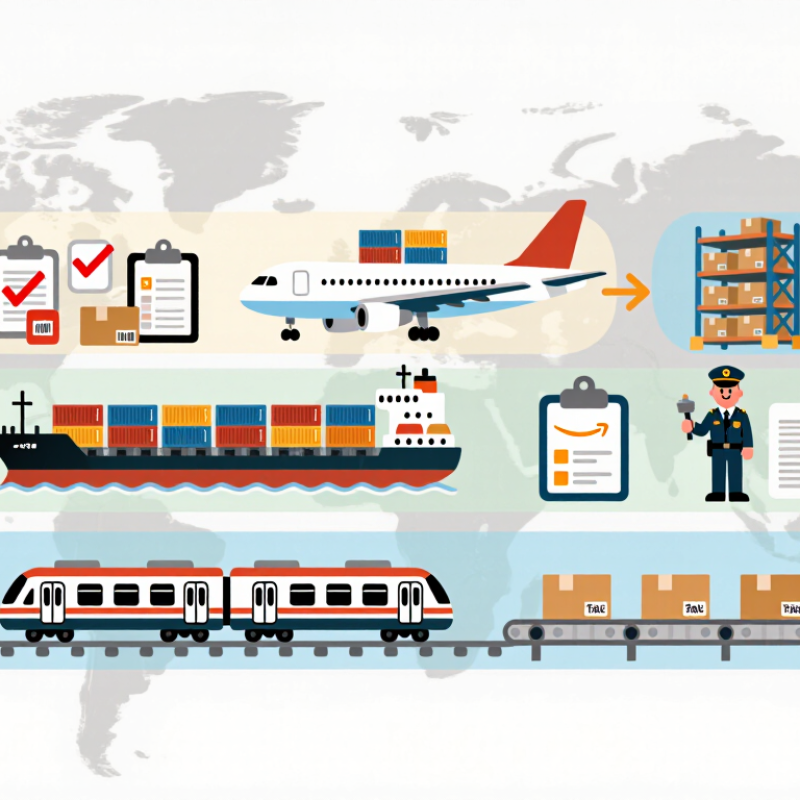
Define Your Amazon FBA Shipping Requirements
Before requesting a freight quote, define your Amazon FBA shipping requirements in writing. State the product type, total units, carton count, carton dimensions, and gross weight. Confirm the receiving destination and preferred delivery window. Small measurement errors can change the final freight cost.
I recommend creating a shipment sheet for every purchase order. Include carton labels, product labels, packing instructions, and pallet details when needed. Choose air, sea, or rail based on urgency, budget, and inventory risk. Sea freight may reduce cost, but it needs more planning time. I once underestimated seasonal demand and left too little stock in transit. That mistake made the cheapest option expensive. Build a realistic buffer.
Tips:
Measure packed cartons, not empty boxes. Photograph the finished shipment. Ask the supplier to confirm carton quantities before pickup. Check whether the freight quote includes export handling, customs clearance, destination charges, and final delivery. Keep commercial invoices and packing lists consistent. If figures differ, pause and investigate. Clear requirements prevent avoidable delays.
Prepare Products and Documents for International Shipment
How to Ship from China to Amazon FBA?
Prepare Products and Documents for International Shipment
Preparing an FBA shipment from China begins with accurate product details. Confirm the product name, quantity, carton size, gross weight, and country of origin. Your supplier should use durable packaging that protects items during ocean, air, and warehouse handling. Check each carton before loading. A small labeling error can delay the entire shipment.
Prepare a commercial invoice, packing list, bill of lading, and shipment plan. The invoice should show the seller, buyer, product description, unit value, total value, and currency. Use the correct HS code and verify it with a qualified customs professional. Product-specific documents may also be required, such as test reports, safety data, or material declarations. Requirements can change, so old documents should not be reused without review.
Tips: Ask the supplier for carton photos before dispatch. Match the photos with your packing list and shipment records. Weigh several cartons yourself when possible. Suppliers sometimes report net weight instead of gross weight, which creates unexpected freight charges. Keep digital copies of every document in one folder. I have seen shipments delayed because one file had a different product quantity. That mistake was avoidable, but easy to miss. Use consistent product names, carton numbers, and measurements across all paperwork.
Choose the Right Shipping Method and Freight Partner
Shipping from China to Amazon FBA is not only a rate comparison. The right method depends on product volume, delivery urgency, carton size, and customs requirements. Air freight suits smaller, time-sensitive shipments, while ocean freight usually fits larger, less urgent orders. Rail or multimodal options may balance cost and speed on selected routes. Request quotes using the same details: carton count, dimensions, gross weight, cargo value, pickup address, and destination fulfillment center.
A capable freight partner should explain every charge, transit stage, and handoff before booking. Ask whether the quote includes export clearance, destination handling, customs brokerage, delivery appointments, and final-mile transport. Confirm who prepares commercial invoices, packing lists, carton labels, and shipment data. The partner should provide milestone tracking, written escalation procedures, and insurance options. Do not choose the lowest quote automatically. Cheap freight can become expensive when storage, rework, or missed appointments appear.
Before dispatch, compare the freight plan with current FBA requirements and carrier restrictions. Measure cartons again; small errors can affect fees and capacity. Use sturdy packaging, accurate product descriptions, and consistent carton markings. Build a buffer for inspections, weather, port congestion, and receiving delays. A practical warning: splitting one shipment across methods may reduce risk, but it can complicate inventory records. I would review that choice carefully. Test the partner with a small shipment first, then assess communication, document accuracy, and delivery performance before committing to larger volumes.
How to Ship from China to Amazon FBA? - Choose the Right Shipping Method and Freight Partner
| Shipping Method |
Best Use Case |
Typical Transit Time* |
Typical Shipment Size |
Relative Cost |
Main Advantages |
Main Limitations |
Key Partner Requirements |
| Express Courier |
Samples, urgent replenishment, or very small shipments |
3–7 days |
Usually under 100 kg |
Highest |
Fast collection, tracking, and simplified door-to-door delivery |
High cost per kilogram; product and battery restrictions may apply |
Reliable tracking, customs experience, and clear handling of restricted goods |
| Air Freight |
Time-sensitive inventory with moderate shipment volume |
7–15 days |
Typically 100–1,000 kg |
High |
Faster than sea freight and suitable for launch or stockout prevention |
Higher freight cost and possible chargeable-weight adjustments |
Accurate dimensional-weight calculation and airport-to-warehouse coordination |
| Ocean Freight – LCL |
Smaller commercial shipments that do not fill a container |
30–50 days |
Usually under 15 CBM |
Low to medium |
Lower entry cost than a full container and flexible for growing sellers |
Longer transit, consolidation delays, and more cargo-handling points |
Transparent destination charges, cargo consolidation controls, and delivery appointment support |
| Ocean Freight – FCL |
Large, predictable inventory replenishment |
25–45 days |
Usually 15+ CBM |
Lowest per unit at high volume |
Efficient unit economics, fewer handling points, and better shipment security |
Long lead time and higher inventory commitment |
Container planning, dependable sailing schedules, customs clearance, and final-mile delivery |
| Rail Freight |
A middle option when air is expensive and sea is too slow |
18–30 days |
Small to medium commercial loads |
Medium |
Shorter transit than ocean freight with lower cost than air in many lanes |
Route availability, border procedures, and schedule changes can affect delivery |
Multimodal coordination, customs expertise, and contingency planning |
| Sea or Air DDP Service |
Sellers seeking a simplified door-to-door process |
20–50 days |
Small to large shipments |
Varies by quote |
One coordinated service from supplier pickup to the designated fulfillment center |
Less control over customs arrangements; vague inclusions can create unexpected charges |
Written confirmation of duties, taxes, customs responsibility, insurance, and delivery scope |
Planning Notes: Transit times are indicative door-to-door ranges and may vary by destination, season, customs processing, port congestion, product category, and fulfillment-center appointment availability. Compare quotes using the same shipment terms, including pickup, export clearance, main transport, import clearance, duties and taxes, delivery, appointment handling, insurance, and possible surcharges.
Shipment Data to Prepare
Carton count, units per carton, gross weight, carton dimensions, product materials, battery details, declared value, and destination fulfillment-center information.
Freight Partner Checks
Verify service coverage, customs capability, cargo insurance options, tracking quality, surcharge policy, claims process, and experience with fulfillment-center delivery appointments.
Recommended Decision Rule
Use express or air for urgent inventory, LCL for smaller planned shipments, FCL for stable high-volume replenishment, and a multimodal option when balancing speed and cost.
Manage Customs Clearance, Duties, and Import Compliance
Shipping goods from China to a fulfillment warehouse requires more than booking ocean or air freight. In practice, customs clearance begins with accurate product classification. A wrong HS code can change duty rates, trigger inspections, or delay delivery. Prepare commercial invoices, packing lists, bills of lading, country-of-origin details, and product compliance records before loading. Do not rely on a supplier’s description alone. It may be incomplete.
Maritime transport carries over 80% of global merchandise trade by volume, according to UNCTAD’s Review of Maritime Transport 2023. That scale does not make every shipment predictable. Customs authorities may question declared value, product composition, or the importer of record. Use a customs broker with experience in both Chinese exports and the destination market. Confirm who pays duties, taxes, storage fees, and examination charges. Landed cost should include all four.
The OECD reports that full trade facilitation implementation could reduce trade costs by 14.3% on average. That figure is useful, but not a promise for every shipment. Keep valuation evidence, supplier contracts, payment records, and certificates organized. Review duty estimates when materials or packaging change. A low invoice value can look attractive, yet it may create serious compliance exposure. Small details matter. I would also allow several buffer days, because even well-prepared declarations can face random inspection or document questions. Recheck the rules before each shipment, rather than copying an old entry.
How to Ship from China to Amazon FBA: Representative U.S. Import Duty Rates
Indicative Most-Favored-Nation duty-rate ranges for common product categories. The exact rate depends on the product’s HTS classification, material, construction, and applicable trade measures.
For customs clearance, confirm the correct 10-digit HTS code, commercial invoice value, country of origin, entry requirements, and any additional duties before shipping inventory to Amazon FBA. Rates shown are representative ranges based on the U.S. Harmonized Tariff Schedule and exclude possible additional trade remedies, brokerage fees, merchandise processing fees, and transportation costs.
Reference: U.S. International Trade Commission, Harmonized Tariff Schedule of the United States.
Deliver Inventory to Amazon FBA and Track Its Receipt
Shipping from China to Amazon FBA requires more than choosing sea or air freight. The real task is delivering inventory correctly and proving its receipt. The 2023 World Bank Logistics Performance Index evaluated 139 economies and identified tracking and tracing as a core logistics measure. That matters when cartons move through factories, ports, customs, warehouses, and fulfillment centers.
Create the shipment inside your FBA account before cargo leaves China. Match the carton count, product labels, and shipment reference exactly. Photograph each pallet, carton label, and sealing process. Ask the forwarder for container numbers, departure dates, arrival estimates, and customs updates. Sea freight carries about 80% of global merchandise trade by volume, according to UNCTAD’s Review of Maritime Transport. It is efficient, but delays can accumulate quietly. A missed connection may change the receiving date by days.
Keep one shared tracking sheet. Record every scan, document, and handover. Compare delivered cartons with the receiving quantity shown in FBA, not only the carrier’s delivery confirmation. A signed delivery note proves arrival, not final warehouse receipt. I have seen sellers wait too long because the tracking page looked complete. That was a mistake. Build an escalation point after delivery, and retain invoices, packing lists, photos, and communication records. The 2023 World Bank report also shows why visibility deserves attention: logistics performance depends on reliable movement, information, and delivery consistency. Tracking is helpful. It is not certainty.
FAQS
Include product type, total units, carton count, packed dimensions, and gross weight. Add carton labels, product labels, packing instructions, and pallet details when required. Keep everything together.
Packed cartons show the shipment’s actual size and weight. Empty-box measurements can produce inaccurate freight quotes. Photograph the finished shipment before pickup.
Match the transport method with urgency, budget, and inventory risk. Air transport is faster, while sea transport may cost less. Rail can suit some timing and budget needs. The cheapest option is not always cheapest overall.
Underestimating seasonal demand can leave too little stock in transit. That mistake happened to me once. Build a realistic buffer for production, transport, and unexpected delays.
Check whether it covers export handling, customs clearance, destination charges, and final delivery. Ask about storage and examination charges too. A low quote may hide important costs.
Prepare commercial invoices, packing lists, bills of lading, origin details, and compliance records. Keep supplier contracts, payment records, and valuation evidence organized. Documents should tell the same story.
An incorrect HS code can change duty rates, trigger inspection, or delay delivery. Do not rely only on the supplier’s product description. Review the classification before every shipment.
Confirm the importer of record and the party paying duties, taxes, storage, and examination charges. A qualified customs broker can help with export and destination requirements. Still, review the details yourself. Mistakes remain possible.
Ask the supplier to confirm carton quantities before pickup. Keep invoices and packing lists consistent. Allow several buffer days for inspections or document questions. Recheck current rules instead of copying an old entry.
Conclusion
China to Amazon FBA Shipping requires careful planning from the start. First, define your inventory needs, including product quantities, packaging standards, delivery timelines, and destination requirements. Prepare products for international transport by checking labeling, carton measurements, invoices, packing lists, and other necessary shipping documents. Selecting the right shipping method—such as air, sea, or rail—depends on budget, urgency, shipment size, and product characteristics. A reliable freight partner can help coordinate pickup, transportation, and communication throughout the process.
Before the goods leave China, confirm customs requirements, import rules, duties, taxes, and product compliance obligations for the destination country. Accurate documentation and consistent product information can help reduce delays and unexpected costs. After customs clearance, arrange final delivery to the assigned fulfillment center, monitor tracking updates, and keep records of shipment milestones. Once the inventory arrives, verify that the fulfillment center has received and processed the shipment so any discrepancies can be addressed promptly.