0%

Agricultural Product Logistics is not simply a matter of moving crops from farm to market. It is a race against heat, time, and handling damage. A crate of berries can look perfect at pickup, then arrive soft after a missed cooling window. Small failures matter. The FAO’s 2019 State of Food and Agriculture estimated that about 14% of food is lost between post-harvest and retail, excluding retail losses. The figure is a warning, not a scorecard for any single carrier. Still, it shows why transport, storage, and coordination deserve careful scrutiny.

The World Bank’s 2023 Logistics Performance Index assesses factors including infrastructure, logistics-service quality, tracking, and timeliness. These measures offer useful questions for comparing providers, though they do not capture every farm’s needs. Martin Christopher, a logistics and supply-chain scholar, is often quoted as saying, “Supply chains compete, not companies.” For agricultural shipments, that idea is practical: growers, carriers, cold-storage operators, and buyers all shape the final condition of a load.

This guide presents ten tips for choosing a provider, from temperature controls and route visibility to claims handling and seasonal capacity. Ask for evidence: recent delivery records, temperature logs, and clear escalation steps. A polished presentation is not proof of reliable execution. And no checklist can remove every risk. A little skepticism helps. The right partner should explain what can go wrong, not just promise that it never will.
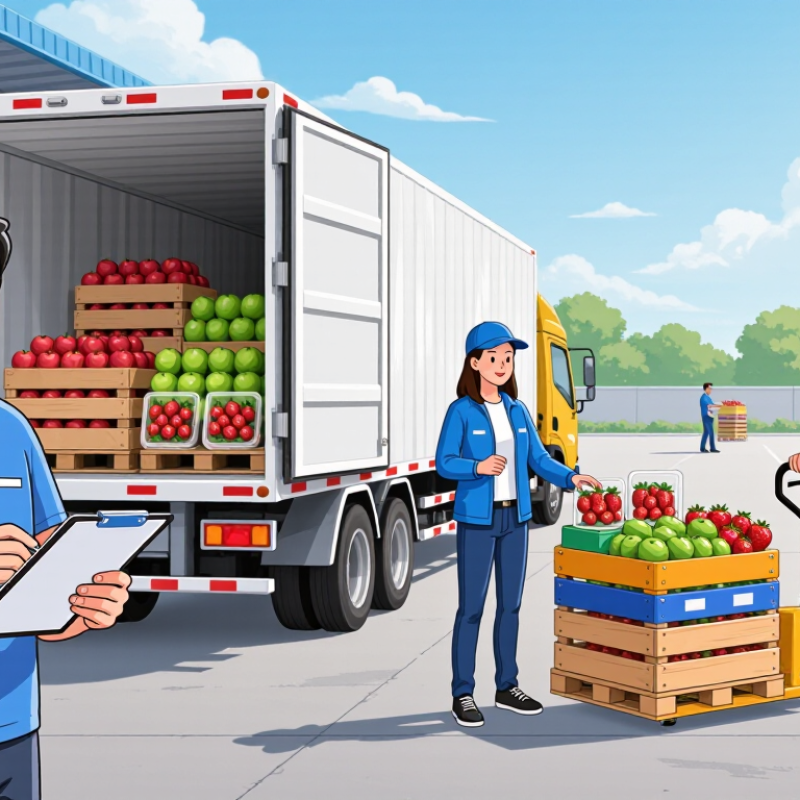
10 Tips for Choosing Agricultural Product Logistics Providers

Define Your Agricultural Logistics Requirements

Before requesting quotes, define what the product needs from pickup to delivery. Record crop type, volume, harvest windows, destination, and acceptable transit time. Specify temperature and humidity ranges where relevant, plus who checks them and how often. For leafy greens, a warm loading bay or a long wait can matter as much as distance.

Note packaging, pallet dimensions, loading access, and whether deliveries require appointment slots. Be specific. “Keep it fresh” is not a workable service requirement.

Set measurable service levels: pickup punctuality, delivery windows, temperature records, damage limits, and response times when delays occur. The FAO’s 2023 report on SDG indicator 12.3.1 estimates that 13.2% of food was lost globally after harvest and before retail in 2021. That figure covers many causes, not logistics alone, but it shows why handling and timing deserve careful planning.

UNEP’s Food Waste Index Report 2024 estimated 1.05 billion tonnes of food waste at retail, food-service, and household levels in 2022; this is not a measure of transport losses. Still, it makes handoffs worth examining.

One awkward detail: harvest days rarely follow the spreadsheet. Build in realistic peak volumes, backup contact procedures, and clear rules for refused or delayed loads. Then ask providers to explain how their operating plans meet those requirements.

Assess Provider Capacity, Coverage, and Transport Options

Choosing a logistics provider starts with matching actual capacity to your harvest, not an ideal week. Ask how many refrigerated trucks, insulated trailers, and trained drivers are available during peak months. Request recent on-time pickup data and a clear plan for breakdowns or sudden volume increases. Ask for evidence, not promises. A provider may have enough vehicles on paper but rely on subcontractors when demand rises. Clarify who controls temperature checks and who contacts you if a unit drifts outside the agreed range. Small details matter.

Coverage should fit the crop’s route, including farm access roads, collection points, and the final market. A map can hide weak links. Ask whether drivers regularly serve your area, and how they handle road closures or long waits at loading bays. Then compare transport options against product sensitivity and distance. Short trips may suit a well-maintained van; longer journeys may need refrigerated line-haul, careful transfer scheduling, or more than one temperature zone. Confirm loading equipment, delivery windows, and proof of condition at handoff. I would not assume the cheapest route is safest. Still, extra service can be unnecessary for hardy produce, so test assumptions with a small shipment and review the records before committing.

Evaluate Handling, Storage, and Product-Safety Practices

When evaluating agricultural logistics providers, watch how goods move from the truck to storage. Ask staff to explain their loading and unloading routine, including how they limit bruising, crushed packaging, and exposure to rain. For fresh produce, even a short wait beside a warm loading bay can affect quality. A clean dock matters. Check whether workers use clean pallets and keep damaged items separate. Ask how they document handling issues, not just whether they have a procedure.

Storage conditions should fit the product, rather than rely on one setting for every load. Ask how staff monitor temperature and humidity, how often they record readings, and what happens when equipment fails. For dry goods, inspect for moisture, pests, and strong odors. For chilled products, ask how they avoid temperature swings during transfers. Request a sample inspection or receiving record, with sensitive details removed. It can show whether checks happen consistently.

Product safety also depends on traceability and clear communication. Ask how lots are identified and how quickly staff can locate a shipment’s records. No checklist catches every risk. It is easy to overvalue polished paperwork and overlook small habits, like leaving doors open during busy loading periods. A brief site visit can reveal those gaps. Look for workers who can explain the process plainly, and ask what they would change after a handling mistake.

10 Tips for Choosing Agricultural Product Logistics Providers - Evaluate Handling, Storage, and Product-Safety Practices

Tip Evaluation area What to check Useful evidence to request Why it matters
1 Commodity-specific handling Ask how procedures differ for the products you ship, including fresh produce, grains, dairy, or other temperature-sensitive goods. Written handling procedures, staff training records, and examples of product-specific loading and unloading instructions. Agricultural products vary in their sensitivity to temperature, moisture, pressure, and handling time.
2 Temperature management Confirm that temperature targets are set for the commodity and shipping plan, and that vehicles or storage areas can maintain them. Temperature records from comparable shipments, equipment maintenance logs, and details of alarm and escalation procedures. Suitable temperature control can help preserve quality and reduce spoilage during transport and storage.
3 Storage conditions Review how the provider monitors storage temperature, humidity, airflow, cleanliness, and product placement where relevant. Facility inspection records, monitoring logs, and documented procedures for responding to out-of-range conditions. Poor storage conditions can contribute to moisture damage, premature ripening, quality loss, or product deterioration.
4 Sanitation and pest control Check how trailers, containers, docks, and storage areas are cleaned, inspected, and protected against pests. Cleaning schedules, inspection checklists, pest-control records, and corrective-action documentation. Clean facilities and equipment help reduce contamination risks and protect product condition.
5 Separation and compatibility Ask how loads are separated from incompatible goods, strong odors, chemicals, allergens, or products with different handling needs. Loading plans, segregation procedures, and rules for inspecting vehicles before loading. Appropriate separation helps prevent cross-contact, odor transfer, physical damage, and other avoidable quality issues.
6 Traceability and records Verify that the provider can link shipment records to relevant lot, load, vehicle, facility, and delivery information. A sample shipment record showing timestamps, handoffs, temperature data when applicable, and delivery confirmation. Clear records support shipment investigations, product tracking, and timely responses to quality or safety concerns.
7 Loading and transit time Discuss loading practices, expected dwell time, route planning, and how delays or missed delivery windows are managed. Loading procedures, transit performance reports, and a process for notifying customers about delays. Long waits and avoidable delays can expose products to unsuitable conditions and disrupt receiving schedules.
8 Equipment and sensor upkeep Ask how refrigeration equipment, data loggers, and other monitoring devices are maintained and checked for accuracy. Preventive maintenance schedules, calibration records where applicable, and equipment breakdown procedures. Well-maintained equipment and reliable monitoring help identify and address handling problems promptly.
9 Product-safety controls Review the provider’s documented food-safety practices, employee responsibilities, incident reporting, and corrective actions. Relevant procedures, training records, audit summaries, and documentation showing how findings are resolved. Documented controls make responsibilities clearer and provide a consistent way to manage potential hazards.
10 Contingency planning Find out what happens if a vehicle fails, a facility loses power, a shipment is delayed, or monitoring data indicates a problem. Written contingency plans, emergency contact procedures, backup arrangements, and examples of incident communication. A prepared response can limit disruption and help protect products when unexpected events occur.

Check Regulatory Compliance and Shipment Visibility

Before choosing an agricultural logistics provider, ask how it verifies compliance for your product and route. Requirements can vary by destination, crop type, packaging, and handling conditions. Request current permits, staff training records, and written procedures for sanitation and temperature control. Check that documents match the services offered, not just a general compliance statement. Small gaps matter.

Tip: Ask for a sample shipment record. It should show pickup time, handoffs, temperature readings when relevant, and delivery confirmation. Confirm who reviews exceptions, such as a delayed truck or a cooling-unit alarm. A clear escalation contact can prevent hours of uncertainty.

Shipment visibility should offer useful details, not merely a moving dot on a map. Look for timely status updates and access to proof of delivery. For sensitive produce, ask whether temperature data is recorded throughout transit and how long records remain available. Test the system with a realistic example. No dashboard is perfect; mobile coverage can fail, and some updates may arrive late. Ask how the provider flags missing data and reports delays, then decide whether its process suits your team’s needs.

10 Tips for Choosing Agricultural Product Logistics Providers

Indicative Transport Temperature Ranges for Selected Produce

Temperature needs vary by commodity and shipment conditions. Use these indicative ranges as a starting point, confirm product-specific requirements, and choose a provider that can document regulatory compliance and provide shipment visibility with temperature monitoring and alerts.

Compare Pricing, Service Records, and Contract Terms

When comparing agricultural logistics quotes, normalize the details before choosing a provider. Separate line-haul charges from fuel, waiting time, refrigeration, loading, and claims fees. Ask for a sample invoice, not just a headline rate. FAO’s 2019 report estimated that 13.8% of food was lost globally between harvest and retail in 2016. That figure is not a provider scorecard. It shows why delays and handling conditions deserve a place in the cost comparison.

Review service records for the routes and products you actually ship. Request recent on-time delivery rates, temperature-excursion logs, damage claims, and response times during harvest peaks. The World Bank’s 2023 Logistics Performance Index assesses six dimensions, including timeliness and logistics competence. Use those dimensions to shape questions, but verify a provider’s own records. A polished average can hide a rough week. Check how results were calculated, and ask for exceptions, not only successes.

Read the contract beside the service data. Confirm delivery windows, temperature ranges, responsibility for spoilage, claim deadlines, and remedies for missed commitments. Check whether fuel surcharges or seasonal capacity fees can change during the term. Ask who records temperatures, and how you receive the data. Keep a sample shipment record. If the provider’s promises sound clear but the contract leaves key terms vague, pause and ask for revisions. I would not assume every small omission is harmless.

FAQS

Which details should I prepare before requesting quotes?

List crop type, volume, harvest dates, destination, and acceptable transit time. Include packaging, pallet dimensions, loading access, and delivery appointments. “Keep it fresh” is not measurable.

How should I describe temperature requirements?

State temperature and humidity ranges where relevant. Name who checks them and how often. A warm loading bay can harm leafy greens. Small delays count.

What service levels should I request?

Set targets for pickup punctuality, delivery windows, temperature records, damage limits, and delay response times. Put each target in writing. Leave little to guesswork.

How can I verify a provider has enough capacity?

Ask how many refrigerated vehicles and trained drivers are available during peak harvest. Request recent pickup data and breakdown plans. Ask for evidence, not promises.

What should I ask about subcontractors?

Find out whether extra demand brings in subcontractors. Clarify who controls temperature checks and who calls when readings drift. One vague handoff can become a real problem.

How do I assess whether a route is suitable?

Check farm roads, collection points, market access, road-closure plans, and likely loading waits. A map can hide weak links. Visit if practical.

Which transport option should I choose?

Match the vehicle to crop sensitivity and distance. A maintained van may suit a short trip; longer routes may need refrigerated transport or scheduled transfers. Extra service is not always better.

Should I test a provider before committing?

Send a small shipment and review timing, temperature records, and handoff condition. I would not trust one good trip too much. That may be cautious, but harvest weeks are uneven.

Conclusion

Choosing the right Agricultural Product Logistics provider starts with a clear understanding of your shipment needs, including product type, volume, delivery schedule, and any temperature or handling requirements. Compare providers’ capacity, service regions, and transport options to confirm they can move your goods reliably from origin to destination. Ask how they manage loading, storage, sanitation, and product protection, since careful handling can help preserve freshness and reduce damage.

Before making a decision, review the provider’s relevant compliance procedures and the tools it offers for tracking shipments and sharing updates. Compare pricing alongside service records, rather than relying on the lowest quote alone, and look closely at contract terms, responsibilities, and procedures for delays or service issues. A provider that matches your operational needs, communicates clearly, and offers dependable safeguards can help create a more predictable and efficient agricultural supply chain.

Benjamin

Benjamin

Benjamin is a highly experienced marketing professional dedicated to helping customers understand the value, applications, and practical benefits of the company’s products. With a strong background in market research, content strategy, and customer communication, he combines professional knowledge......