Final Mile Delivery Service has become a decisive part of the customer experience. It covers the movement of goods from a local hub to the customer’s door. That short distance can shape the entire brand impression. A delayed parcel can erase the value created by fast checkout, careful packaging, and responsive support. In contrast, a precise delivery window feels practical and reassuring, especially when customers can track a driver’s progress.
Industry data shows why this stage deserves serious attention. Pitney Bowes’ Parcel Shipping Index 2023 recorded 21.2 billion parcels in the United States, highlighting the scale of delivery operations. The report also showed that carriers handled intense volume and cost pressure. DHL’s 2024 E-Commerce Trends Report found that delivery options strongly influence online purchase decisions. It also identified sustainability as an increasing customer expectation. These findings suggest that delivery is no longer a background process. It is part of product value.
The challenge is operational, not merely technological. A retailer must coordinate inventory, route planning, labor, traffic, customer availability, and returns. One missed time window may create a second delivery attempt. That adds fuel use, labor expense, and customer frustration. Experience from logistics operations shows that small local delays often multiply across dense urban routes. The data is useful, but it cannot explain every doorstep experience. Customer expectations differ by location, product type, and urgency. That limitation deserves attention. A reliable Final Mile Delivery Service therefore requires measurable performance, transparent communication, and continuous review—not promises that sound impressive but fail at the door.
What Final Mile Delivery Service Means
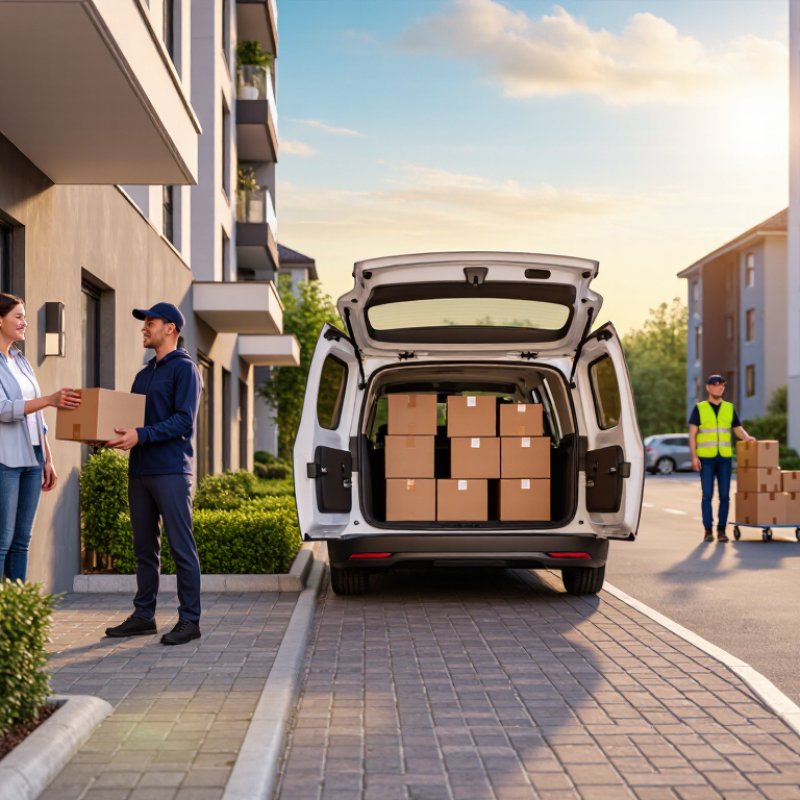
Final mile delivery service means the last movement of a shipment from a local facility to the recipient’s door. It is the point where a warehouse promise becomes a real customer experience. A parcel may travel hundreds of miles efficiently, then spend twenty minutes finding the correct apartment entrance. The final step often includes route planning, address checks, delivery windows, and proof of handoff. It can also involve stairs, security desks, bad weather, and a recipient who is away.
In practice, reliable service depends on accurate information and careful human decisions. Drivers need clear addresses, practical routes, and instructions that match the building. Dispatch teams monitor delays and adjust stops when traffic changes. Customers may receive arrival updates, while delivery records show when and where the parcel was handed over. These details reduce uncertainty for household items and business supplies. Still, technology cannot solve every problem. A map may select a fast road that becomes unusable during school release.
Good final mile operations require measurement and humility. Teams can review failed attempts, damaged packaging, missed time windows, and repeated address errors. Those records reveal weak points that a dashboard may hide. A responsible service protects personal information and follows local delivery rules. It also checks whether “successful delivery” means a parcel was left safely, not merely scanned. The process is practical, visible, and sometimes imperfect. That imperfection deserves attention, not excuses.
How Final Mile Delivery Works
Why Is Final Mile Delivery Service Important?
How Final Mile Delivery Works
Final mile delivery begins after an order leaves a regional distribution center. The parcel reaches a local depot, often before dawn. Workers scan, sort, and group packages by delivery area. Route-planning software then considers distance, traffic, vehicle capacity, and promised delivery windows. A driver collects the assigned parcels and follows a planned sequence. The route may still change when roads close or customers miss the delivery.
At the doorstep, delivery requires more than movement. The driver may verify an address, capture delivery proof, and place the parcel safely. A failed attempt creates extra labor, fuel use, and customer frustration. Returns reverse the process through collection, inspection, restocking, or responsible disposal. The system sounds orderly. In practice, one inaccurate address can disrupt an entire route.
Industry data shows why this stage deserves careful management. The Capgemini Research Institute reported that last-mile delivery can represent up to 41% of total supply chain costs. The World Economic Forum projected a 36% increase in urban delivery vehicles by 2030 without major operational changes. That growth could increase congestion and emissions. Better address data, consolidated deliveries, local pickup options, and realistic time windows can reduce pressure. Yet efficiency should not depend on unsafe schedules. Human judgment still matters, and digital tools are not flawless.
Why Is Final Mile Delivery Service Important?
How Final Mile Delivery Works: the final mile connects a local distribution point with the customer. It strongly influences delivery speed, operating efficiency, urban congestion, and environmental impact.
Chart explanation: The chart uses a 2019 baseline index of 100 and shows projected changes in urban last-mile delivery by 2030. Delivery vehicles, delivery-related emissions, and congestion are all expected to increase, highlighting why route planning, consolidation, and efficient final-mile operations are important.
Source: World Economic Forum, The Future of the Last-Mile Ecosystem, 2020. Values are indexed projections based on the report's stated percentage changes.
Why Final Mile Delivery Shapes Customer Satisfaction
Why Is Final Mile Delivery Service Important?
Why Final Mile Delivery Shapes Customer Satisfaction
Final mile delivery is where a digital promise becomes a physical experience. A customer may forget a smooth checkout, but remembers a late parcel at 9 p.m. The Baymard Institute’s 2024 checkout research found that
48% of online shoppers abandoned carts because extra costs were too high.
Delivery fees and unclear arrival dates can damage trust before dispatch even begins.
Small details matter. Accurate tracking reduces anxious messages. Narrow delivery windows help customers plan work, meals, and family care. A parcel left safely at the agreed location feels controlled, not accidental. Salesforce reported in its 2023 State of the Connected Customer that
88% of customers consider the experience as important as the product.
That expectation reaches the doorstep.
Yet delivery operations are rarely perfect. Traffic, weather, address errors, and failed handoffs still create friction. Companies should measure more than speed. They need to monitor first-attempt success, delivery damage, response time, and customer complaints. Capgemini Research Institute has reported that
last-mile delivery can represent more than 40% of total delivery costs,
making poor planning expensive. Faster is not always better. A fast delivery with missing instructions can create more frustration than a slower, well-communicated one. Customers may forgive a delay when the explanation is clear. Silence is harder to accept.
The Economic and Operational Value of Final Mile Delivery
Why Is Final Mile Delivery Service Important?
The economic value of final mile delivery is easy to see at the doorstep. It connects inventory with customers, supports repeat purchases, and protects cash flow. McKinsey’s “Parcel Delivery: The Future of Last Mile” estimates that final mile operations can represent 53% of total shipping costs. A missed delivery, an inaccurate address, or an inefficient route can quickly reduce profit.
Scale makes the pressure greater. The Pitney Bowes Parcel Shipping Index reported about 161 billion parcels worldwide in 2022. Each parcel requires labor, vehicle capacity, tracking, and customer communication. Small operational errors multiply at this volume. Route planning, delivery density, and realistic time windows therefore become financial decisions, not only logistics tasks. Faster is not always better.
Urban impact also matters. The World Economic Forum’s “Future of the Last-Mile Ecosystem” projects a 32% rise in urban delivery traffic emissions by 2030 without major changes. Shared delivery points, electric vehicles, and consolidated routes can reduce unnecessary trips. However, these solutions require suitable infrastructure and reliable data. The reports provide valuable direction, but they cannot describe every neighborhood perfectly. Local traffic, weather, and building access still disrupt carefully designed plans. That gap deserves more attention.
Key Challenges and Emerging Solutions in Final Mile Delivery
Why Is Final Mile Delivery Service Important?
Final-mile delivery shapes the customer’s last impression. A missed handoff can mean a delayed project, an empty shop shelf, or a frustrated household. The challenge is not distance alone. Traffic, failed deliveries, narrow time windows, and rising labor costs create daily pressure.
The World Economic Forum’s 2020 report projects a 78% increase in urban delivery demand by 2030. It also forecasts 36% more delivery vehicles and 21% higher emissions. These figures expose a difficult trade-off: faster service can create heavier congestion. Route planning, pickup lockers, electric vehicles, and neighborhood consolidation can reduce repeated trips. However, each solution depends on local infrastructure and customer behavior.
Reliable operations need accurate addresses, live tracking, realistic delivery windows, and trained drivers. A route may look efficient on a screen, yet a locked building can erase those gains. Data helps, but it does not understand every stairwell, weather delay, or anxious customer. The OECD’s International Transport Forum highlights the need to coordinate freight planning with urban transport policy. That coordination remains uneven. Operators should measure failed attempts, delivery density, fuel use, and complaint rates, rather than praising speed alone. A perfect route on paper can still end badly.
Conclusion
Final Mile Delivery Service refers to the last stage of the shipping process, when a package moves from a local distribution point to the customer’s address. Although this stage is often the shortest in distance, it can be the most complex because it requires accurate scheduling, efficient routing, clear communication, and successful delivery in diverse locations. A well-organized final mile process helps ensure that orders arrive safely, on time, and in good condition.
The quality of Final Mile Delivery Service strongly influences customer satisfaction, as delivery speed, convenience, tracking visibility, and reliability shape the overall purchasing experience. It also creates economic and operational value by improving delivery efficiency, reducing unnecessary transportation costs, and supporting better resource management. However, traffic congestion, rising fuel expenses, delivery density, failed attempts, and environmental concerns remain significant challenges. Emerging solutions include route optimization, real-time tracking, flexible delivery options, automated systems, and cleaner transportation methods, all of which can make final mile operations more efficient and sustainable.