Explore premier door-to-door, DDP, ocean-rail intermodal, and express cargo routes connecting major Chinese manufacturing hubs directly to Europe, North America, and global hubs.
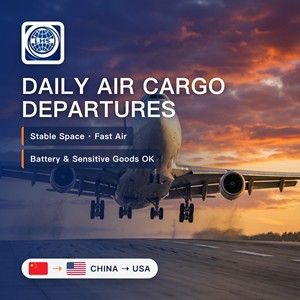
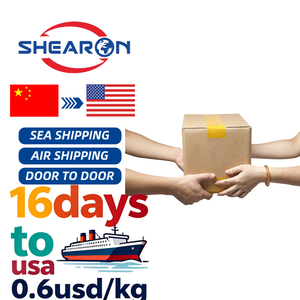
Over the past decade, China’s rail freight infrastructure has evolved from a regional transport alternative into a dominant pillar of international trade logistics. Commonly referred to under the umbrella of China Railway Express (CR Express), the trans-Eurasian rail corridor represents a high-capacity landbridge connecting over 100 major industrial cities in China across Central Asia and Russia directly into more than 200 destinations in Europe, as well as specialized ocean-rail links to North America.
For international buyers, supply chain executives, and enterprise procurement teams, partnering with leading China rail freight factories and licensed forwarders provides a crucial competitive advantage. Rail transportation effectively closes the structural gap between the speed of air freight and the cost-efficiency of ocean shipping, operating with carbon intensity footprints up to 75% lower than traditional air freight.
Strategic Insight: As global supply chains face ongoing maritime chokepoints, volatile spot rates, and strict ESG compliance mandates, Eurasian rail freight offers predictable lead times, fixed schedule reliability, and integrated DDP (Delivered Duty Paid) clearance mechanisms.
By leveraging modern containerization, real-time IoT tracking, cold-chain temperature regulation, and expedited border-crossing protocols, premier Chinese logistics factories have streamlined transcontinental transport into a seamless plug-and-play procurement solution for Western markets.
To optimize global sourcing, enterprise buyers must understand the primary rail corridors originating from key manufacturing clusters in Eastern, Southern, and Central China. Each gateway offers specific geographic advantages depending on cargo weight, volume, urgency, and final destination.
Originating from Northern industrial hubs such as Tianjin, Beijing, and Harbin, passing through Trans-Siberian routes. Ideal for heavy industrial machinery, raw material exports, and bulk goods bound for Eastern Europe with stable, year-round operational capacity.
The core artery for Eurasian trade, connecting mega-manufacturing zones like Chongqing, Chengdu, Xi'an, and Wuhan via Kazakhstan. Transit time to key European hubs like Duisburg and Malaszewicze ranges between 12 to 16 days, catering to consumer electronics, automotive parts, and high-value textiles.
Integrates Pearl River Delta factories (Guangdong, Shenzhen, Guangzhou) via coastal feeder rail to interior terminals or ocean-rail landbridges to North American West Coast ports. Optimized for e-commerce, Amazon FBA replenishment, and fast-fashion inventory rotation.
| Transport Mode | Avg Transit Time (CN to EU/US) | Cost Index ($/KG) | Reliability & Weather Security | CO2 Footprint (g/t-km) |
|---|---|---|---|---|
| China-EU Rail Freight (CR Express) | 12 - 18 Days | $1.80 - $3.20 | High (Fixed Track Schedule) | ~18g |
| Ocean Freight (Standard FCL/LCL) | 30 - 45 Days | $0.60 - $1.20 | Moderate (Port Congestion Risk) | ~25g |
| Air Freight (Direct / Transshipment) | 4 - 7 Days | $5.50 - $9.00 | High (Subject to Flight Capacity) | ~500g |
| Sea-Rail Multimodal Intermodal | 18 - 25 Days | $1.40 - $2.40 | High (Hybrid Speed/Cost) | ~30g |
As global commerce adjusts to rapid digital transformation and regional trade realignments, purchasing teams must structure their logistics strategies around key emerging macro trends:
Global buyers increasingly demand single-landed-cost pricing structures. Premier Chinese freight exporters now offer turnkey DDP rail solutions where customs duties, HTS classifications, VAT filings, and last-mile trucking are fully bundled, shifting regulatory liability away from the buyer.
Real-time visibility has evolved beyond periodic waypoint scans. Next-generation rail freight services incorporate GPS, door-open light sensors, and ambient humidity/temperature telemetry, allowing remote monitoring across remote Central Asian corridors via cloud portals.
Export demand for pharmaceutical components, perishable agricultural goods, and temperature-sensitive chemicals has driven heavy investment in active-powered diesel-electric reefer containers capable of maintaining precise climate controls down to -25°C even through extreme Siberian winters.
With cross-border e-commerce booming, rail exporters are establishing direct injection networks into European and American distribution hubs. Freight is pre-sorted, palletized, and labeled at Chinese rail origin terminals for direct handoff to local UPS, DHL, or truckload carriers upon arrival.
Environmental stewardship is no longer an optional corporate initiative; it is a fundamental sourcing metric enforced by international regulations like the European Union's Carbon Border Adjustment Mechanism (CBAM) and corporate Scope 3 emissions reporting standards.
Standard electric-powered rail transport generates significantly fewer greenhouse gases than long-haul aviation and heavy road haulage. Chinese rail terminals are actively adopting solar-assisted staging yards, automated gantry cranes, and paperless CIM/SMGS unified digital consignment notes. By streamlining cross-border customs checks via pre-clearance EDI algorithms, transit delays at border gauge-change points (such as Malaszewicze or Khorgos) have been reduced by over 40%.
Environmental Impact KPI: Replacing 100 TEUs of air freight with Eurasian rail transport reduces net CO2 emissions by approximately 4,200 metric tons—providing instant carbon credit relief for multinational brands.
Navigating global freight demands an operational backbone that combines deep on-the-ground factory presence in Asia with comprehensive customs and drayage control across international destination ports.
With dedicated operating desks in China, Vietnam, and Bangladesh, alongside US headquarters in Los Angeles and New York, we maintain direct control over factory cargo pickups, container staging, export licenses, and pre-shipment inspections.
We convert traditional FOB factory purchases into seamless DDP door-to-door deliveries. Importers receive a single, transparent landed invoice covering international freight, customs entries, tariffs, harbor maintenance fees, and final-mile drayage.
As certified members of the global WCA World Network, our logistics execution adheres to strict international compliance standards. Our in-house customs brokers provide accurate HTS classification guidance, ruling out tariff overpayments and avoiding customs hold-ups.
Whether you require standard FCL block train bookings, LCL consolidation, drayage container transfers, Amazon FBA prep services, or specialized perishable reefer support, our 24/7 dedicated control tower ensures your goods move predictably from factory floor to warehouse door.
Get clear, actionable answers to common compliance, operational, and tariff questions encountered during China rail freight procurement.
Get immediate access to competitive rail container rates, dedicated space allocations, and expert DDP clearance support from our global logistics specialists.
