Engineered for high-density trade lanes from China's primary manufacturing hubs (Guangdong, Shenzhen, Guangzhou, Ningbo, Shanghai) to North America, Europe, and Australia.
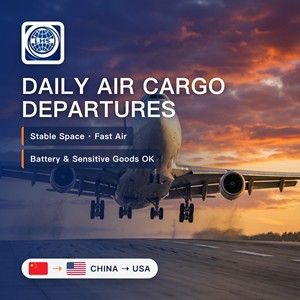
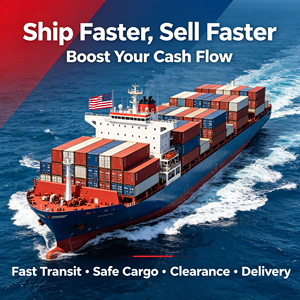
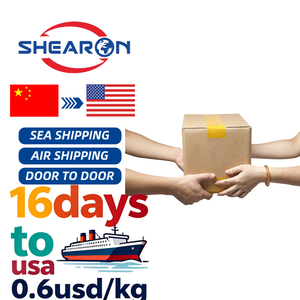
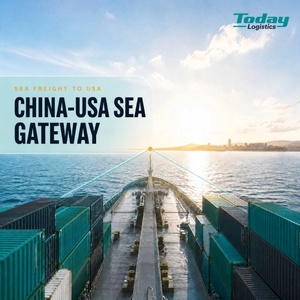
In the hyper-competitive landscape of global international trade, procurement directors, brand owners, and e-commerce enterprises no longer evaluate freight forwarders merely as transactional transportation brokers. Modern cross-border supply chains require an operational architecture that bridges origin-side execution in China directly with destination-side customs clearance and drayage in the United States and Europe. Selecting an elite China shipping agent factory and supplier is the single most critical factor in mitigating landed-cost volatility, avoiding tariff penalties, and protecting inventory velocity.
Core Logistics Mandate: True supply chain resilience is achieved when an international freight partner exercises single-point accountability—managing cargo from factory floor pick-up, port consolidation, export clearance, ocean transit, ISF 10+2 filings, to final mile Amazon FBA or warehouse delivery under one seamless Delivered Duty Paid (DDP) framework.
Historically, international buyers operated under traditional Free On Board (FOB) terms, transferring responsibility to the buyer once cargo passed the ship’s rail at origin ports such as Shenzhen, Ningbo, or Shanghai. However, managing fragmented ocean carriers, US Customs brokers, port drayage truckers, and third-party warehouses (3PLs) independently creates severe communication friction and unexpected costs—such as demurrage, detention, and examination fees.
By leveraging an advanced FOB-to-DDP Conversion Model engineered by an established freight forwarder with local teams in both Asia (China, Vietnam, Bangladesh) and destination hubs (Los Angeles, New York), importers eliminate administrative bottlenecks. Under DDP (Delivered Duty Paid), all freight charges, US HTS duty liabilities, Harbor Maintenance Fees (HMF), Merchandise Processing Fees (MPF), and final mile truck dispatch are consolidated into a predictable, transparent landed cost per unit.
| Incoterm Structure | Origin Factory Pickup | China Customs Export | Ocean / Air Freight | Destination Duty & Taxes | Final Mile Drayage / FBA | Landed Cost Predictability |
|---|---|---|---|---|---|---|
| EXW (Ex Works) | Buyer Responsibility | Buyer Responsibility | Buyer Responsibility | Buyer Responsibility | Buyer Responsibility | Low (High Volatility) |
| FOB (Free On Board) | Supplier Covered | Supplier Covered | Buyer Responsibility | Buyer Responsibility | Buyer Responsibility | Moderate |
| DDU (Delivered Duty Unpaid) | Agent Managed | Agent Managed | Agent Managed | Buyer Responsibility | Agent Managed | High |
| DDP (Delivered Duty Paid) | Fully Integrated | Fully Integrated | Fully Integrated | Fully Integrated | Fully Integrated | Maximum (Guaranteed) |
The global procurement ecosystem is undergoing a structural realignment. Supply chain executives must navigate shifting trade policies, regulatory enhancements by U.S. Customs and Border Protection (CBP), and evolving buyer preferences. Understanding these multi-year trends allows forward-thinking importers to design agile logistics networks capable of absorbing systemic disruptions.
While China remains the undisputed manufacturing powerhouse for complex electronics, hardware, and consumer goods, sourcing routes are expanding into Vietnam, Malaysia, and Bangladesh. Premier logistics suppliers maintain unified operational control across China and Southeast Asian feeder networks to facilitate cross-border consolidation without administrative overhead.
With Section 301 tariffs, anti-dumping reviews, and non-intrusive CBP inspections on the rise, automated Harmonized Tariff Schedule (HTS) classification guidance prevents costly red flags. Modern freight forwarders deploy digital compliance checks to verify duty liability prior to vessel departure.
Container visibility has evolved from static ocean bill of lading (BOL) updates to active IoT tracking. Enterprise buyers receive telemetry on GPS positioning, ambient container temperature, moisture levels, and automated port gate-out events, dramatically reducing demurrage exposure.
E-commerce sellers shipping directly from Chinese suppliers into the Amazon FBA network face strict compliance demands: carton dimension caps, FNSKU barcode placement, customized palletizing specs, and mandatory Carrier Appointment Request Portal (CARP) scheduling. Non-compliance results in rejected deliveries, expensive inventory re-handling, or stranded listings during peak Q4 selling seasons.
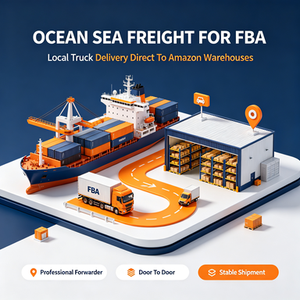
A specialized China-to-Amazon FBA Shipping Agent acts as a physical buffer zone. Cargo collected from suppliers in Shenzhen or Guangzhou is processed at local origin consolidation centers, inspected for packaging integrity, and routed via fast ocean services (such as Matson CLX/CLX+ or EXX). Upon arrival at U.S. West Coast gateways (Los Angeles / Long Beach), localized port drayage teams transfer containers to nationwide distribution centers or perform cross-docking for direct FBA delivery—guaranteeing 100% compliance with Amazon's receiving protocols.
A true master freight forwarder understands that generic shipping methodologies fail when applied to specialized commodities. Different product categories require distinct operational handlers, environmental controls, and legal documentation.
Driven by strict seasonal cycles, apparel shipping from China, Vietnam, and Bangladesh demands garment-on-hanger (GOH) container options, high-cube LCL consolidation, and rapid air-to-ocean mode switching to safeguard retail launch deadlines.
Moving high-value electronic components and battery-powered goods requires rigorous non-dangerous goods (NDG) certification, MSDS verification, secure high-security seals, and temperature-controlled air freight space allocations.
Overweight cargo, heavy industrial components, and auto parts necessitate flat-rack containers, specialized tri-axle drayage chassis, and precise HTS duty classification under complex trade agreements.
Perishable & Cold Chain Expertise: For agricultural commodities and temperature-sensitive items, reefer container monitoring, phytosanitary documentation verification, and expedited FDA/USDA customs clearance are essential to prevent product degradation during transit.
Combining deep regional expertise in Asian manufacturing hubs with an expansive U.S. logistics infrastructure (Los Angeles HQ, New York branch operations, and nationwide drayage networks), our organization sets the benchmark for international supply chain execution.
Unlike fully automated, impersonal digital brokers, every account is backed by experienced logistics human specialists who proactively communicate, troubleshoot exceptions, and optimize your shipping lanes.
As a fully licensed Non-Vessel Operating Common Carrier (NVOCC) and active member of the WCA World network, we hold direct contract rates with top ocean carriers (2M, OCEAN Alliance, THE Alliance), securing vessel space even during peak crisis periods.
Our strategically situated West Coast (LAX/LGB) and East Coast (JFK/EWR) warehouse facilities offer short- and long-term storage, pallet transloading, cross-docking, and nationwide final-mile truckload dispatch.
Under FOB (Free On Board), the seller is only responsible for inland transport in China and export customs at the departure port. The buyer assumes all risk and cost for ocean/air freight, US customs clearance, tariffs, and final delivery. Under DDP (Delivered Duty Paid), your shipping agent manages the entire journey end-to-end, delivering cargo to your specified destination with all duties, taxes, and freight pre-calculated into a single landed price.
Demurrage occurs when containers sit in port terminals past free time limits, while detention applies to delayed container return to ocean lines. We prevent these costs by pre-clearing US Customs via automated ISF 10+2 filings before vessel arrival, maintaining dedicated port drayage chassis fleets, and leveraging local drop-and-hook warehouse operations in Los Angeles and New York.
Yes. Our origin consolidation services allow buyers sourcing from multiple factories (e.g., in Guangzhou, Shenzhen, and Ningbo) to deliver cargo to our central warehouse. We verify item counts, inspect packaging, consolidate goods into a single Full Container Load (FCL) or structured Less than Container Load (LCL), and issue one master bill of lading.
Key legal documents include the Commercial Invoice, Packing List, Master Bill of Lading (MBL) or House Bill of Lading (HBL), Importer Security Filing (ISF 10+2), and product-specific certificates (such as FDA prior notice, FCC forms, or Phytosanitary permits). Our customs clearance specialists review all paperwork prior to vessel loading.
Ocean LCL rates are calculated based on volume in Cubic Meters (CBM) or weight (w/m ratio, where 1 CBM = 1,000 kg). Express Air Freight charges are calculated on chargeable weight using the volumetric formula (Length x Width x Height in cm / 5000), taking whichever value is higher between actual gross weight and volumetric weight.
The workflow includes: 1) Factory pickup or receiving at our origin hub; 2) Package inspection and FNSKU labeling check; 3) Ocean/Air transit booking; 4) US Customs pre-clearance; 5) Transloading at our US warehouse; and 6) Carrier Appointment Request Portal (CARP) scheduling for preferred slot delivery direct to Amazon FBA warehouses.
Consult with our senior logistics architects to evaluate your trade routes, review HTS classification duty rates, and receive a customized, competitive landed cost proposal.
