Select your tailored international supply chain path. Direct integration with major global trade corridors and automated U.S. customs entry systems.
In the contemporary global trade paradigm, sourcing manufactured goods from international Original Equipment Manufacturer (OEM) suppliers requires far more than identifying high-capacity factory floors. For enterprise procurement directors, brands, and e-commerce conglomerates importing into North America and Europe, the true bottleneck has shifted from manufacturing throughput to export clearance validation, tariff compliance, and landed-cost predictability.
Cross-border regulatory shifts—including stringent U.S. Customs and Border Protection (CBP) enforcement, Section 301 tariff adjustments, forced labor prevention compliance (such as UFLPA), and rigorous HTS (Harmonized Tariff Schedule) code audits—have redefined the operational risk landscape. Sourcing from custom OEM export clearance factories requires a fully integrated supply chain architecture that merges origin-level factory oversight with destination-side customs brokerage and final-mile fulfillment.
Traditionally, OEM factories operated on simple Free On Board (FOB) terms, delegating all export documentation, customs filings, and transport logistics to the buyer once goods passed the ship's rail. However, modern procurement mandates demand a transition toward transparent Delivered Duty Paid (DDP) and managed FOB models. High-performing OEM suppliers in manufacturing epicenters like Guangdong (Shenzhen, Guangzhou), Vietnam, and Bangladesh now partner directly with licensed international freight forwarders to provide seamless outbound export clearance.
Export clearance at the origin factory encompasses critical administrative checks, including:
The financial viability of custom OEM sourcing hinges on accurate duty calculation. Underestimating Section 301 tariffs or misclassifying high-tech consumer electronics, auto parts, or textiles can rapidly transform profitable OEM runs into costly trade liabilities. Leading global logistics operators mitigate this by implementing early-stage Tariff Engineering—analyzing product componentry during the prototyping phase to identify valid HTS subheadings that minimize duty exposure legally while maintaining full compliance.
Synthesizing origin factory pickup, ocean/air transport, US clearance, and warehouse distribution under a unified operational umbrella.
Dedicated regional teams operating directly in key Asian manufacturing hubs including China (Guangzhou, Shenzhen, Ningbo), Vietnam, and Bangladesh for immediate factory pickup and physical cargo inspection.
In-house customs specialists providing precise HTS classification guidance, ruling reviews, and duty exposure forecasting to guarantee 100% CBP compliance prior to vessel departure.
Rapid container drayage out of major West Coast (Los Angeles / Long Beach) and East Coast (New York / New Jersey) marine terminals directly to transloading facilities, preventing expensive demurrage fees.
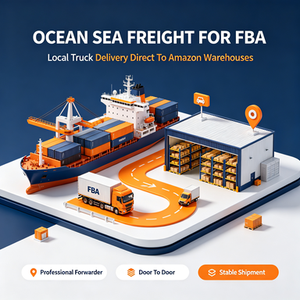
Comprehensive e-commerce logistics including automated carton labeling checks, palletization, FBA carrier appointment scheduling, and safety stock storage within US fulfillment centers.
Eliminate unexpected billing variances with predictable DDP landed-cost quotes that bundle factory pickup, ocean/air freight, port fees, customs duties, and final destination door delivery.
Specialized reefer logistics and priority customs clearance for temperature-sensitive agricultural goods, food products, and sensitive OEM chemical components demanding unbroken cold chains.
The upcoming decade represents a fundamental transformation in how cross-border physical goods are cleared through customs and moved between factory floors and distribution networks. Enterprises optimizing their procurement strategies must adapt to three core structural trends:
As global brands diversify manufacturing out of single markets, OEM procurement is increasingly spread across secondary hubs like Vietnam, Malaysia, India, and Bangladesh. However, fragmented sourcing creates logistical operational friction. The winning strategy involves partnering with a single, unified logistics provider capable of consolidating multi-country origin flows, standardizing export manifest documentation, and utilizing centralized bonded distribution centers.
Customs authorities worldwide are replacing paper-based documentation with mandatory electronic single-window systems (e.g., U.S. CBP Automated Commercial Environment - ACE). Modern OEM clearance relies heavily on automated commercial invoice parsing, AI-driven HTS mapping, and real-time compliance validation. Importers leveraging automated clearance pipelines experience average port dwell-time reductions of 48 to 72 hours compared to traditional paper-reliant importers.
Environmental regulations in European and North American markets are enforcing strict reporting of supply chain carbon footprints. Enterprise buyers now evaluate OEM factory partners not only on piece-rate pricing and quality control, but also on the carbon intensity of their export routing. Optimizing container load factors through professional LCL (Less than Container Load) consolidation and switching from air freight to expedited sea-express routes (such as Matson/DDP sea-air hybrids) provides both cost reductions and Scope 3 compliance.
Evaluate operational responsibilities, risk handoff points, and landed cost efficiency across primary trade terms.
| Incoterm 2020 | Origin Factory Clearance | Ocean/Air Freight Risk | US Import Customs & Duty | Final Mile Delivery | Ideal Procurement Scenario |
|---|---|---|---|---|---|
| FOB (Free On Board) | Managed by OEM Factory | Buyer Responsibility | Buyer Responsibility | Buyer Responsibility | Large enterprise buyers with direct carrier contracts and in-house customs teams. |
| CIF (Cost, Insurance & Freight) | Managed by OEM Factory | Seller pays freight; Buyer holds risk | Buyer Responsibility | Buyer Responsibility | Traditional commodity purchases; often leads to hidden destination port arrival fees. |
| DDP (Delivered Duty Paid) | Managed by Logistics Partner | Managed by Logistics Partner | Managed by Logistics Partner | Managed by Logistics Partner | Recommended for modern OEM buyers: Complete landed-cost control with zero paperwork burden. |
Asiana USA is a premier international shipping company and freight forwarder headquartered in Los Angeles, California, with major regional offices in New York and key origin management offices situated throughout China, Vietnam, and Bangladesh. As an authorized member of the WCA World Network, we bridge the gap between Asian manufacturing powerhouses and North American consumer markets.
Unlike automated software aggregators or fragmented local brokers, Asiana USA delivers a people-first, accountable logistics model. Every OEM shipment is assigned dedicated trade specialists who understand tariff structures, carrier allocations, and warehouse fulfillment requirements.
Direct ownership of operations at Los Angeles (LAX/LGB) and New York (JFK/EWR) gateways ensures immediate port drayage, container devanning, and domestic freight distribution across North America.
From binding ruling applications to freight forwarding agent agreements, our customs experts protect your enterprise against costly penalties, customs holds, and retroactive duty adjustments.
Expert solutions to complex cross-border procurement, tariff management, and logistical hurdles.
Consult with our international trade and customs clearance specialists to audit your supply chain, reduce landed costs, and streamline cross-border freight.
Contact Us