Streamlined end-to-end multimodal transport solutions, direct from leading Asian manufacturing networks to global commercial fulfillment centers.
Empowering international buyers with transparent landed costs, multi-origin consolidation, and robust US port presence.
In modern global commerce, selecting the right manufacturing logistics framework directly dictates gross margins, risk exposure, and supply chain resilience. While traditional Free On Board (FOB) terms push the entire operational and transit burden onto the buyer as soon as goods pass the ship’s rail at origin, DDU Shipping (Delivered Duty Unpaid)—formally updated under ICC Incoterms 2020 as DAP (Delivered at Place)—re-engineers the accountability matrix between international factories and enterprise procurement teams.
Strategic Takeaway: DDU/DAP terms grant enterprise buyers complete oversight over import clearance while forcing original equipment manufacturers (OEMs) and freight partners to assume transit risks, ocean freight volatility, and origin handling logistics right up to the destination warehouse ramp.
Procurement directors navigating trans-Pacific and Asian trade lanes must precisely evaluate the legal and operational differences between Delivered Duty Unpaid (DDU) and Delivered Duty Paid (DDP). Under DDU, the supplier or manufacturer acts as the primary orchestrator of origin inland haulage, export customs clearance, ocean or air freight carriage, and destination drayage. However, the buyer remains the official Importer of Record (IOR), assuming responsibility for customs entry filings, Harmonized Tariff Schedule (HTS) classifications, import duties, harbor maintenance fees (HMF), and local Value Added Tax (VAT).
Conversely, DDP absolves the buyer from customs interaction entirely. While DDP offers convenience, high-volume importers frequently favor DDU/DAP to maintain direct compliance control, leverage custom tariff bond structures, and prevent overseas suppliers from marking up import duties or misclassifying goods under incorrect HTS lines.
| Operational Metric | FOB (Free On Board) | DDU / DAP (Delivered Duty Unpaid) | DDP (Delivered Duty Paid) |
|---|---|---|---|
| Freight & Transit Risk | Transfers to Buyer at Origin Port | Maintained by Manufacturer until Destination | Maintained by Manufacturer until Destination |
| Export Customs Filing | Managed by Factory | Managed by Factory / Freight Forwarder | Managed by Factory / Freight Forwarder |
| Importer of Record (IOR) | Buyer / Importer | Buyer / Importer (Full Control) | Seller or Third-Party Agent |
| Duty & Tariff Payment | Paid directly by Buyer | Paid directly by Buyer to CBP / Local Customs | Paid by Seller (Often marked up) |
| Final Drayage & Last-Mile | Arranged by Buyer | Coordinated by Logistics Manufacturer | Coordinated by Logistics Manufacturer |
Collaborating with specialized freight forwarding manufacturers—such as Asiana USA and integrated Asian logistics hubs—transforms cross-border freight from an unpredictable expense into a competitive strategic asset. Key corporate advantages include:
Eliminate friction between factories, drayage truckers, and ocean carriers. A single accountable entity manages the cargo lifecycle from Asia manufacturing plants straight to US warehouse doors.
By decoupling duty payments from shipping charges, buyers avoid hidden factory markups on Section 301 tariffs, ensuring exact financial visibility prior to vessel departure.
Integrated destination teams in major gateways like Los Angeles and New York handle rapid port drayage, eliminating costly container storage penalties at crowded marine terminals.
As global trade environments adapt to geopolitical shifts, tariff recalibrations, and digital transformation, DDU shipping and manufacturing integration is undergoing four critical evolution cycles:
1. Geographic Diversification & Multi-Origin Routing: Sourcing strategies are rapidly shifting toward a "China + 1" model, expanding primary manufacturing into Vietnam, Bangladesh, and Malaysia. Leading DDU freight partners have established dedicated regional offices across Shenzhen, Guangzhou, Ho Chi Minh City, and Dhaka to execute seamless multi-country consolidation under uniform DDU contracts.
2. Automated Customs & Algorithmic HTS Classification: Future DDU freight networks leverage direct API integrations with US Customs and Border Protection (CBP) ACE systems. Machine-learning compliance engines scan Commercial Invoices and Packing Lists at the point of origin, flagging duty mitigation opportunities via the First Sale Rule or Chapter 98 provisions before cargo gets loaded.
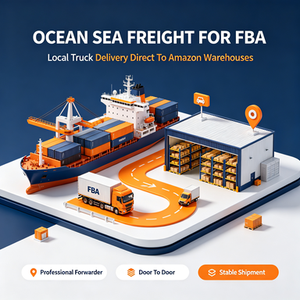
3. Direct-to-Amazon FBA & Cross-Dock Fulfillment Integration: Modern DDU logistics manufacturers no longer stop at commercial warehouse docks. Advanced offerings feature automated Amazon FBA appointment scheduling, container devanning, carton labeling validation, and palleted truckload (TL) delivery direct to Amazon Fulfillment Centers (e.g., ONT8, FTW1) without intermediary handling delays.
4. Sustainable Multimodal Green Corridors: Environmental, Social, and Governance (ESG) mandates are driving top freight forwarding agents to adopt electric drayage fleets in port hubs, optimized eco-speed ocean vessel bookings, and real-time carbon footprint reporting metrics for enterprise importers.
Headquartered in Los Angeles, California, with primary branch operations in New York and key origin management hubs in China, Vietnam, and Bangladesh, Asiana USA represents the gold standard in international freight forwarding and DDU supply chain management.
Unlike traditional non-asset freight brokers, Asiana USA blends extensive local origin teams with deep North American port infrastructure. As an active member of the WCA World Network, the organization manages complex multimodal transport networks spanning ocean FCL/LCL, air freight, drayage, US customs compliance guidance, short- and long-term warehousing, and final-mile delivery.
Expert answers to the most crucial regulatory, financial, and operational questions regarding DDU/DAP manufacturing and international shipping.
