
The Definitive Guide to China Freight Consolidation, Origin Logistics & Landed Cost Optimization
An in-depth analysis for B2B Importers, Supply Chain Directors, and E-Commerce Brands navigating multi-vendor sourcing from China's primary industrial hubs.
In the contemporary global trade paradigm, supply chain efficiency is no longer dictated merely by per-unit manufacturing costs. As global brands expand their supplier matrices across China’s manufacturing corridors—including the Pearl River Delta (Shenzhen, Guangzhou, Dongguan), the Yangtze River Delta (Ningbo, Shanghai, Suzhou), and Northern industrial hubs—the friction of managing fragmented Less-than-Container Load (LCL) shipments has escalated. Fragmented shipping leads to compounded administrative expenses, duplicated origin handling fees, volatile customs entry points, and heightened demurrage risk at US and European destination ports.
Partnering with a top-tier China freight consolidation supplier and exporter resolves these operational bottlenecks. Freight consolidation (buyer’s consolidation or multi-vendor LCL aggregation) enables importers to combine small-to-medium cargo batches from multiple independent manufacturers into single Full-Container Load (FCL) shipments or orchestrated DDP (Delivered Duty Paid) ocean and air channels. This white paper breaks down the strategic mechanics, future procurement trends, regulatory duty structures, and landed-cost optimization frameworks essential for modern global buyers.
1. Operational Architecture: How Buyer's Consolidation Works
Freight consolidation operates at the intersection of origin warehousing, inventory synchronization, and export compliance. When sourcing from multiple suppliers across Guangdong, Zhejiang, or Jiangsu, shipping each purchase order individually creates massive cost inefficiencies. Standard LCL shipping incurs fixed base charges—such as CFS (Container Freight Station) fees, Bill of Lading (B/L) release fees, customs clearance filings, and terminal handling charges (THC)—for every individual consignment.
Our enterprise consolidation framework transforms this fragmented process into a unified supply chain workflow:
Factory Pickup & Staging
Our local origin fleets pick up LTL (Less-than-Truckload) goods directly from suppliers across Shenzhen, Guangzhou, Ningbo, and Shanghai, transporting them to our secure consolidation facilities.
Quality Inspection & Prep
Cargo is audited upon arrival. We conduct outer-carton inspections, re-labeling (including FNSKU barcodes for Amazon FBA), palletization, and custom crating to conform with international maritime standards.
Unified Container Loading
Multiple vendor shipments are stuffed into single 40ft HQ or 20ft containers under a single Master Bill of Lading (MBL), dramatically reducing destination port fees and customs entry friction.
2. Financial & Operational Impact Matrix: Direct LCL vs. Freight Consolidation
To quantify the economic benefit of origin consolidation, consider the comparative matrix below analyzing a typical procurement cycle involving 4 distinct factory sources shipping to the United States or Europe:
| Logistics Metric | Traditional Multi-Supplier LCL | Asiana USA Origin Consolidation (FCL/DDP Hub) | Strategic Benefit |
|---|---|---|---|
| Customs Declarations | 4 Separate Export Filings & 4 Import Entries | 1 Master Export Filing & 1 Consolidated Entry | 75% reduction in customs brokerage admin fees |
| Origin Terminal Fees (THC/CFS) | Charged individually per CBM per vendor | Flat per-container THC rate | Eliminates redundant minimum CFS charges |
| Transit Volatility | High (4 independent vessel schedules & arrivals) | Zero (Synchronized single-vessel booking) | Predictable warehouse delivery window |
| Fulfillment Readiness | Requires destination deconsolidation & sorting | Pre-labeled, pre-palletized at China warehouse | Direct delivery to Amazon FBA or End-User |
| Average Freight Cost / CBM | $160 - $240 / CBM (Summed LCL rates) | $95 - $140 / CBM (Consolidated landed rate) | Up to 35% net savings on freight expenditure |
By shifting from FOB (Free On Board) multi-supplier purchasing to an integrated FOB-to-DDP Consolidation framework, importers lock in a guaranteed landed cost per unit prior to vessel departure. This eliminates unpredictable destination demurrage, pier pass fees, and unexpected customs hold surcharges.
3. Future Trends Shaping China Freight Consolidation (2026–2030)
The international freight forwarding landscape is undergoing a structural shift driven by digital supply chain integration, regulatory changes, and evolving e-commerce models. Importers who align with next-generation consolidation practices gain a resilient market advantage.
A. Micro-Fulfillment Staging in Origin Ports
Global e-commerce brands are increasingly relocating their primary pick-and-pack inventory staging closer to manufacturing origins in Guangdong and Zhejiang. Rather than shipping bulk inventory to costly US or European warehouses before sorting, enterprise buyers utilize our China consolidation centers for direct-to-consumer (D2C) fulfillment and FBA replenishment staging. Goods are stored economically in Asia and dispatched via express air or fast-sea DDP channels only when demand triggers occur.
B. Dynamic Tariff Engineering & HTS Code Harmonization
Navigating US Section 301 tariffs, anti-dumping duties, and changing European Union carbon adjustment mechanisms (CBAM) requires pre-shipment tariff auditing. Modern consolidation suppliers provide integrated compliance checks before container loading. By verifying Harmonized Tariff Schedule (HTS) classifications across multi-vendor goods, freight forwarders ensure that consolidated shipments utilize legitimate tariff relief options—such as the First Sale Rule or accurate sub-item grouping—without violating customs regulations.
C. Green Freight Logistics & Carbon Accounting
Environmental compliance has become a major buyer requirement. Single-container consolidation significantly reduces carbon emissions per ton-kilometer compared to fragmented LCL transport across multiple feeder vessels. Furthermore, ocean carriers operating LNG-powered ships and green sea corridors (such as the Shanghai-to-Los Angeles green shipping lane) are prioritized within modern freight consolidation route planning.
4. Enterprise Advantage: Dedicated Global Infrastructure
Headquartered in Los Angeles, California, with primary US gateways in Los Angeles and New York, alongside established origin teams in China, Vietnam, and Bangladesh, Asiana USA / Valdivia Logistics delivers a seamless bridge between Asian manufacturing networks and North American/European destination markets. As a certified member of the WCA World Network, our logistics capability spans over 190 countries.
Dual-Coast US Gateways
Direct presence in Los Angeles (7522 Maie Ave) and New York provides localized port drayage, bonded transloading, and rapid container retrieval, avoiding costly port detention.
People-First Account Management
Unlike impersonal digital brokers, every shipment is assigned a dedicated bilingual logistics specialist who oversees factory communication, container loading, and customs entry.
Full Incoterm Flexibility
Whether transitioning from EXW, FOB, or DDU to comprehensive Delivered Duty Paid (DDP), we handle customs duty calculation, ISF 10+2 filings, and final mile trucking under a single invoice.
5. Practical Framework: Executing a Consolidated Freight Order
To successfully execute a multi-vendor freight consolidation program from China, supply chain managers should adopt the following structured workflow:
STEP 1: Origin Vendor Coordination & Booking Cut-Offs
Issue purchase orders under standard FOB terms. Provide your suppliers with our consolidation warehouse details in Shenzhen, Ningbo, or Shanghai. Establish a strict Cargo Ready Date (CRD) window so all factory deliveries align within a 48-hour staging window.
STEP 2: Inbound Receiving & Dimensional Audit
Upon arrival at our hub, each factory lot is weighed and measured (CBM verification). Outer cartons are checked for barcode compliance, fragile warnings, and structural integrity. Any discrepancy in carton count or damage is flagged instantly via digital photo audit reports.
STEP 3: Customs HTS Code Mapping & Export Filing
Our licensed customs brokers consolidate packing lists and commercial invoices from each factory. We review commodity descriptions against US International Trade Commission (USITC) tariff tables, ensuring precise HTS classification and seamless export clearance with China Customs.
STEP 4: Ocean/Air Transit & Automated Destination Drayage
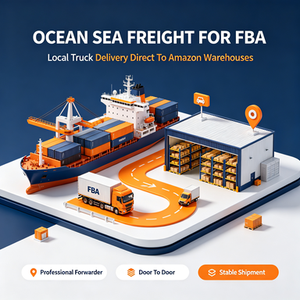
Containers are loaded onto premium ocean loops (e.g., Matson, Mason, COSCO, or CMA CGM) or routed via direct air freight charters. Upon arrival at LAX, Long Beach, or NY/NJ terminals, our dedicated drayage fleet pulls containers straight to our US warehouses for final mile dispatch or Amazon FBA delivery.
6. Frequently Asked Questions (FAQ) for China Freight Purchasing
Q: What is the primary difference between standard LCL and Buyer's Freight Consolidation?
Standard LCL (Less-than-Container Load) involves a freight forwarder co-loading your cargo inside a container with goods from completely unrelated companies. You are subject to destination deconsolidation fees, potential customs holds caused by other shippers' contraband, and rigid CFS schedules. Buyer's Freight Consolidation aggregates goods solely from your chosen manufacturers into a dedicated container, giving you complete control over vessel scheduling, packing standards, and single-entry customs clearance.
Q: How does DDP (Delivered Duty Paid) shipping protect my business from hidden fees?
Under DDP terms, the freight forwarder assumes full responsibility for all ocean/air transport, export documentation, US import customs clearance, duty and tax payments, port drayage, and final mile delivery. You receive a single, all-inclusive landed price per unit or per CBM, completely eliminating unexpected destination fees such as demurrage, chassis split surcharges, or pier pass expenses.
Q: Can Asiana USA consolidate shipments directly for Amazon FBA warehouses?
Yes. We specialize in China-to-Amazon FBA logistics. Our origin warehouses inspect cartons for FBA barcode compliance, apply FNSKU labels, construct compliant pallets (48"x40" wooden pallets with proper height limits), and schedule Carrier Central delivery appointments at Amazon fulfillment centers across North America and Europe.
Q: How do you handle suppliers located in different provinces across China?
We operate integrated consolidation hubs in major logistics gateways including Shenzhen, Guangzhou, Ningbo, Shanghai, and Qingdao. If your suppliers are distributed across different provinces, we coordinate cost-effective domestic LTL trucking to bring all goods into the nearest primary seaport warehouse for single-container loading.
Q: What documentation is required from my suppliers prior to consolidation?
Each supplier must provide a Commercial Invoice (CI), detailed Packing List (PL), factory address for pickup, and declaration of any commodity compliance specifics (e.g., MSDS for battery-containing electronics or wood packaging certificates). Our origin team compiles these into a master manifest for customs entry.
Q: How are volumetric weight and CBM calculated for consolidated freight?
For sea freight, CBM (Cubic Meter) is calculated as Length (m) × Width (m) × Height (m). Standard ocean freight charges are based on 1 CBM = 1,000 kg (whichever is higher). For air freight express, dimensional weight is calculated using the standard industry ratio: Length (cm) × Width (cm) × Height (cm) ÷ 5000 (or 6000 for standard air cargo).
Optimize Your China Supply Chain & Reduce Landed Costs
Connect with Asiana USA’s senior freight consolidation specialists today. We will audit your current shipping routes, analyze your multi-supplier POs, and deliver a tailored consolidation roadmap.
Get Catalog