In the contemporary global trade paradigm, sourcing products from China has transformed from simple port-to-port maritime shipment into highly integrated, technology-driven Order Fulfillment and Cross-Border Supply Chain Infrastructure. Global enterprise buyers, Amazon FBA sellers, and multi-channel e-commerce brands no longer evaluate logistics partners purely on freight rate per cubic meter (CBM). Instead, competitive advantage is dictated by landed-cost predictability, customs compliance security, volumetric efficiency, and seamless multi-modal execution.
As a primary global exporter, China hosts an intricate ecosystem of logistics nodes spanning manufacturing hubs in Guangdong (Shenzhen, Guangzhou, Dongguan), Zhejiang (Yiwu, Ningbo, Hangzhou), and Jiangsu. Connecting these industrial centers with overseas consumer destinations in the United States, North America, Europe, and Australia requires end-to-end accountability. Choosing premier order fulfillment suppliers ensures that cargo transitions flawlessly from factory pickup, warehousing, pick-and-pack, sorting, and export clearance to final-mile drayage, rail ramp dispatch, and door-step fulfillment.
Selecting the optimal fulfillment mechanism depends on inventory turnover rates, commodity classification, margins, and seasonal demand variance. Below is an enterprise decision framework detailing the primary logistics channels deployed by leading China fulfillment suppliers:
| Fulfillment Channel | Optimal SKU Profile | Transit Lead Time | Duty & Incoterm Structure | Key Advantage |
|---|---|---|---|---|
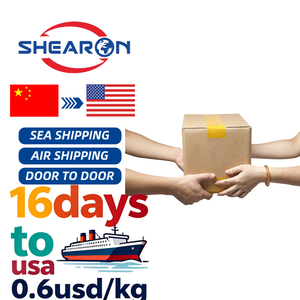
| DDP Ocean Freight (FCL / LCL) | High-volume, heavy weight, low velocity margin products | 16 – 28 Days | DDP (Delivered Duty Paid) - Seller/Agent handles all tax | Lowest cost per unit; predictable total landed budget |
| Air Cargo Express (DHL / UPS / Special Line) | High-value electronics, seasonal product launches, small parcel | 3 – 7 Days | DDP / DDU (Duty Delivery Unpaid) | Rapid inventory capitalization; minimal stockout risk |
| LCL + Express Delivery (Hybrid) | Medium-volume e-commerce inventory, initial sample batches | 12 – 18 Days | DDP Door-to-Door | Bypasses port drayage bottlenecks via courier final-mile |
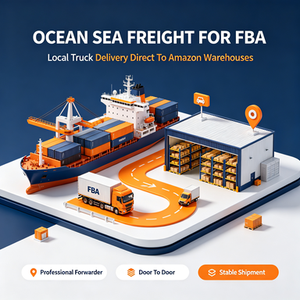
| Amazon FBA Dedicated Sea + Truck | Standard oversized or carton-packed palletized goods | 18 – 25 Days | DDP with pre-booked FBA ISA appointments | Strict compliance with Amazon prep, labeling, and pallet guidelines |
Leading international logistics providers, such as Asiana USA (Valdivia Logistics), maintain a distinct competitive moat by deploying a dual-ended operational presence. Rather than relying solely on third-party overseas brokers, top fulfillment exporters combine dedicated origin control teams across China, Vietnam, and Bangladesh with deep domestic US destination infrastructure in Los Angeles and New York.
Many overseas buyers acquire products under FOB (Free On Board) Incoterms, leaving them exposed to unexpected demurrage, ocean freight spikes, and complex US Customs entries. Premier fulfillment exporters convert raw FOB purchasing agreements into streamlined DDP door-to-door deliveries, bundling ocean carriage, HTS duty clearance, ISF filing, harbor maintenance fees, and final-mile trucking into one transparent landed rate.
With complex Section 301 tariffs, anti-dumping duties, and fluctuating tariff classifications, incorrect Harmonized Tariff Schedule (HTS) code selection can destroy product margins or cause customs seizures. World-class fulfillment partners deploy in-house licensed customs brokers who review product engineering schematics prior to export, guaranteeing compliance with U.S. Customs and Border Protection (CBP) and FDA requirements.
Congestion at major marine terminals (such as the Port of Los Angeles, Long Beach, and New York/New Jersey) can lead to catastrophic detention charges. Advanced exporters operate proprietary drayage fleets and strategically located distribution centers. This facilitates rapid container pull-outs, transloading, cross-docking, palletization, and temp-controlled storage for perishable or sensitive goods.
The cross-border export environment is experiencing systemic shifts driven by geopolitical realignments, digital trade networks, and heightened consumer expectations for rapid order fulfillment. Forward-thinking procurement officers must align with suppliers capable of navigating the following mega-trends:
While China remains the primary core for manufacturing execution, enterprise brands are increasingly diversifying final assembly or secondary sourcing across Southeast Asia (Vietnam, Bangladesh, Malaysia). Modern order fulfillment exporters have responded by creating multi-origin routing platforms. A single logistics dashboard now allows enterprise buyers to consolidate raw material supply from Shenzhen with garment packaging in Dhaka or electronics sub-assembly in Ho Chi Minh City, executing consolidated ocean freight into North America under unified SLA standards.
Relying exclusively on direct-to-FBA shipping introduces vulnerability to Amazon receiving limits and elevated storage fees. The future of China export fulfillment lies in 3PL Hybrid Staging. Cargo is shipped via high-cube containers from Ningbo or Shanghai to US coastal 3PL hubs. Here, inventory is split dynamically: 30% is injected into Amazon FBA based on immediate algorithmic restock needs, 40% feeds B2B retail distribution (Walmart, Target), and 30% fulfills direct-to-consumer (DTC) Shopify orders via local fast-mile ground delivery.
Manual quote sheets and delayed freight estimates are being replaced by automated API integrations. Tier-1 China exporters embed real-time rate calculators into enterprise ERPs, projecting exact duties, harbor taxes, fuel surcharges, and last-mile delivery costs before a manufacturing purchase order is finalized. This level of cost visibility guarantees margin protection even amidst volatile spot-market ocean freight swings.
The integration of advanced logistics tech stack modules has redefined operational transparency for modern importers:
Real-time GPS sensors, reefer temperature monitoring, and shock alerts embedded directly inside containers, giving agricultural and sensitive electronics buyers continuous visibility.
High-speed vision systems scan FNSKU labels, master carton markings, and pallet dimensional accuracy at origin warehouses in Shenzhen before container loading to ensure 100% Amazon acceptance.
AI algorithms cross-reference commercial invoices against historical CBP entry summary records (Form 7501) to auto-verify duty exemptions, PGA requirements, and HTS alignment prior to vessel departure.
Mining user intent and addressing critical operational bottlenecks for international supply chain managers:
Under Free On Board (FOB), your Chinese manufacturer is only responsible for placing goods onto the ocean vessel at the origin port (e.g., Yantian or Ningbo). As the buyer, you bear full financial and operational responsibility for ocean transit, marine insurance, US Customs clearance, tariff payments, terminal handling fees, drayage, and final delivery. Under Delivered Duty Paid (DDP), a specialized order fulfillment supplier manages the complete end-to-end voyage. All freight fees, duties, tariffs, customs clearance, and inland trucking are consolidated into one final landed cost, transferring risk away from the buyer.
Amazon FBA enforces strict packaging rules regarding box dimensions, weight limits (max 50 lbs), FNSKU scannability, pallet height (60 inches standard), and GMA pallet quality. Enterprise China fulfillment partners maintain dedicated prep and packing hubs in Guangdong and Zhejiang. They conduct thorough pre-shipment inspections, re-carton non-compliant packaging, apply barcode labels, schedule carrier appointments via Amazon’s Carrier Central (ISA), and execute direct-to-fulfillment-center drop-offs without third-party handling delays.
To clear U.S. Customs (CBP) and relevant Partner Government Agencies (PGAs) without delays, importers must provide: 1) Commercial Invoice with detailed product descriptions and unit values, 2) Packing List specifying net/gross weight and carton counts, 3) Bill of Lading (BOL) or Air Waybill (AWB), 4) Importer Security Filing (ISF 10+2) submitted at least 24 hours prior to ocean vessel departure. For electronics containing lithium batteries, MSDS (Material Safety Data Sheets), UN38.3 test reports, and FCC compliance certificates are also required.
Air freight carriers bill cargo based on whichever value is greater: Actual Weight or Volumetric (Dimensional) Weight. The standard IATA volumetric conversion formula for international express air shipping is: Volumetric Weight (kg) = [Length (cm) × Width (cm) × Height (cm)] ÷ 5000. Professional China fulfillment suppliers utilize automated carton compression and custom box sizing to minimize dimensional volume, protecting clients from inflated air courier fees.
Demurrage (fees charged when container sits inside the port terminal beyond free days) and Detention (fees charged for keeping equipment outside the port past the return window) occur when local trucking or warehouse offloading stalls. Partnering with a logistics supplier that maintains dual US coastal gateways (Los Angeles and New York), off-dock storage yards, pre-pull capabilities, and dedicated drayage drivers guarantees that containers are pulled immediately upon vessel discharge, bypassing port terminal storage penalties.
Connect directly with our senior cross-border supply chain engineers. Get custom landed-cost analysis, HTS tariff reviews, and tailored DDP ocean or air freight routing plans for your business.
