Connecting global manufacturing hubs in Guangdong, Shenzhen, and Ningbo with Luxembourg's prime agricultural distribution centers via DDP door-to-door logistics.
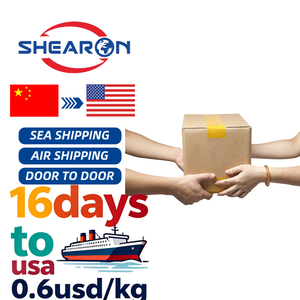
Luxembourg serves as Western Europe's premier inland logistics hub. Our end-to-end supply chain infrastructure bridges Asian OEM production lines directly to the heart of the Grand Duchy.
Direct routing through the Eurohub Sud terminal in Bettembourg, seamlessly linking ocean container arrivals at Antwerp and Rotterdam via electrified rail corridors into Luxembourgish ag-hubs.
Pre-clearance documentation handling according to ASTA (Administration des Services Techniques Agricoles) guidelines, ensuring zero hold-ups for bio-machinery and smart farming equipment.
Specialized active reefer containers equipped with IoT telemetry, continuously monitoring relative humidity and temperature ranges (-25°C to +25°C) for sensitive perishable crops and agro-chemicals.
As the European Union intensifies its transition toward sustainable agriculture under the Farm to Fork Strategy, the Grand Duchy of Luxembourg presents a unique set of logistical imperatives. Despite its compact geographical footprint, Luxembourg acts as a critical consumption center and strategic transit nexus for high-value agricultural machinery, precision farming components, organic fertilizers, and fresh produce. Importing custom OEM (Original Equipment Manufacturer) agricultural products from key manufacturing regions in Asia—notably Guangdong, Zhejiang, and Jiangsu—demands an sophisticated freight architecture capable of harmonizing long-haul ocean transport with stringent inland regulatory frameworks.
Logistical operations destined for Luxembourg rely heavily on seamless multimodal transitions. Unlike larger continental nations with direct deep-sea ports, Luxembourg’s supply chain relies on feeder pathways originating at primary Northern Range ports:
| Transport Mode | Primary Entry Gateway | Transit Time (from CN Ports) | Best Suited OEM Product Categories | Customs Framework |
|---|---|---|---|---|
| Ocean Freight (FCL) + Rail | Port of Antwerp -> Bettembourg | 22 - 26 Days | Tractors, Heavy Harvesting Equipment, Stainless Steel Silos | EU Duty Deferred / DDP |
| Ocean Freight (LCL) + Truck | Port of Rotterdam -> Luxembourg City | 24 - 28 Days | Irrigation Pumps, Drone Spare Parts, Greenhouse Frames | Standard DDP Single-Window |
| Air Freight Express | Luxembourg Findel Airport (LUX) | 3 - 5 Days | IoT Ag-Tech Sensors, Bio-Pesticide Samples, Micro-Motors | Priority Clearance (LUX-LOG-IN) |
| Reefer Cold Chain (Ocean+Road) | Port of Zeebrugge -> Diekirch Hub | 20 - 24 Days | Perishable Crop Packaging, Organic Fertilizers, Seeds | Phytosanitary Check Required |
Customs optimization plays a decisive role in protecting operating margins for OEM agricultural suppliers. When importing into Luxembourg, vendors must master three core compliance layers:
A. HTS Code Classification & Tariff Optimization: Agricultural machinery categorized under HS Chapter 84 (Tractors, Soil Preparation Machinery, Harvesting Equipment) frequently qualifies for preferential import tariffs when accompanied by accurate Certificates of Origin. Misclassification can trigger unnecessary duties ranging from 3.2% to 12.8%. Our team conducts comprehensive pre-shipment HTS audits to ensure exact tariff alignment.
B. Luxembourg Tax System (TVA Integration): Luxembourg maintains the lowest standard Value Added Tax (TVA) rate in the EU at 17%, alongside reduced rates (14%, 8%, and 3%) applicable to specific agricultural inputs, fertilizers, and raw food items. Under our FOB-to-DDP (Delivered Duty Paid) logistics model, we handle the administrative burden of filing TVA deferment applications through the Luxembourg Customs and Excise Agency (Administration des Douanes et Accises), preserving liquidity for importers.
C. Phytosanitary Controls & ISPM 15 Packaging: All wooden crates, pallets, and dunnage housing heavy OEM machinery must strictly comply with ISPM 15 heat-treatment standards. Shipments entering the Moselle agricultural zone undergo visual inspection by ASTA officials. Non-compliant timber packaging risks immediate re-export or costly quarantine fumigation at the border point.
Custom OEM supply chains must adapt to distinct local sub-sectors across the Grand Duchy:
Combining deep origin-side control across Asia with dedicated European destination management to deliver hassle-free door-to-door execution.
With dedicated local offices in Guangzhou, Shenzhen, Ningbo, Vietnam, and Bangladesh, we oversee factory pickup, supplier consolidation, cargo labeling, and export documentation directly at the source.
No fragmented third-party handoffs. A single dedicated logistics team owns your cargo from factory gate to final Luxembourg warehouse delivery, providing absolute financial and operational transparency.
As accredited members of the WCA World network, our global freight forwarding agent agreements grant access to priority vessel space, guaranteed container allocations, and bonded warehousing across Europe.
Answers to common operational questions asked by European procurement teams and Asian factory suppliers.
Under traditional FOB terms, the Luxembourgish buyer must coordinate ocean freight, customs clearance, port drayage, and import VAT payment. Under our DDP model, Asiana USA manages the entire supply chain end-to-end. We handle origin collection, ocean/air transport, EU customs entry, duty filing, Luxembourg TVA payment, and final mile delivery to your facility under one all-inclusive landed invoice.
The Port of Antwerp is generally the most efficient gateway for heavy agricultural equipment bound for Luxembourg. Antwerp offers direct rail links to the Bettembourg Intermodal Terminal, enabling rapid container transfers without the highway toll surcharges associated with long-distance heavy haulage.
In addition to the Commercial Invoice, Packing List, and Bill of Lading, electronic ag-tech products entering Luxembourg require a valid CE Declaration of Conformity, REACH compliance documentation, and RoHS certification. If devices utilize wireless telemetry, spectrum compliance approval from the ILR (Institut Luxembourgeois de Régulation) is required prior to customs clearance.
We deploy active temperature-controlled reefer containers outfitted with remote IoT monitoring units. These systems maintain strict environmental parameters (+2°C to +8°C or dry cold) throughout the maritime voyage and subsequent road freight leg from Northern Range ports into Luxembourgish storage warehouses.
Yes. We operate centralized consolidation warehouses in Shenzhen and Guangzhou. We collect LCL (Less-than-Container Load) shipments from multiple custom OEM factories, perform quality control checks, re-pack or label according to EU standards, and load them into a single consolidated container destined for Luxembourg.
Standard ocean freight from Shenzhen to Antwerp or Rotterdam takes approximately 22 to 25 days port-to-port. Customs clearance, rail transfer to Bettembourg, and final truck dispatch to a Luxembourgish warehouse typically add 3 to 5 business days, resulting in a total door-to-door transit window of 26 to 30 days under normal operating conditions.
Speak with an experienced international freight specialist today. Get custom DDP quotes, route optimization schedules, and tariff classification guidance for your OEM agricultural products.
