Integrated multimodal transport, Amazon FBA fulfillment, and localized door-to-door (DDP/DDU) dispatch mechanisms operating seamlessly between Vietnam, China, North America, and Europe.
As global manufacturing shifts toward the "China+1" diversification model, Ho Chi Minh City (HCMC) has emerged as the premier logistics and industrial nexus of Southeast Asia. Accounting for over 20% of Vietnam’s National Gross Domestic Product (GDP) and serving as the primary commercial gateway to Southern Vietnam, HCMC anchors an expansive industrial ecosystem that includes Bình Dương, Đồng Nai, Long An, and Bà Rịa-Vũng Tàu.
However, the rapid growth of export manufacturing in garments, footwear, consumer electronics, auto parts, and agricultural goods has placed unprecedented pressure on final-mile delivery networks, port-to-factory drayage, and urban distribution channels. Navigating the logistics topology of Southern Vietnam requires a sophisticated understanding of infrastructure constraints, complex customs clearance under the Vietnam General Department of Customs, and localized transportation regulations such as inner-city truck curfews in HCMC’s high-density districts.
This whitepaper outlines the structural mechanics of Final Mile Delivery Services in the Ho Chi Minh City market, offering global importers, foreign buyers, and B2B enterprises an actionable framework for establishing resilient, cost-effective, and fully compliant cross-border supply chains.
Final-mile delivery in Ho Chi Minh City is not a uniform long-haul process; it demands hyper-localized strategies tailored to specific economic sectors and geographical zones. Below are four key operational scenarios where specialized freight execution provides significant competitive advantage.
Southern Vietnam’s industrial heartland relies on rapid shuttle connections between manufacturing complexes—such as VSIP I & II (Bình Dương), Amata (Đồng Nai), and Tân Thuận Export Processing Zone (HCMC District 7)—and marine hubs like Cát Lái Terminal and the Cái Mép-Thị Vải deep-water port complex. Final-mile logistics suppliers manage heavy container drayage, empty container positioning, and just-in-time pickup schedules to avoid severe quay congestion and demurrage charges.
Navigating the dense urban corridors of District 1, District 3, and Thủ Đức City presents distinct mobility hurdles due to strict daytime truck curfews (restricting trucks over 2.5 tons between 6:00 AM–9:00 AM and 4:00 PM–8:00 PM). Modern suppliers deploy fleet-mixing strategies—combining light electric vans, motorized cargo bikes, and bonded micro-warehouses—to execute uninterrupted last-mile B2B replenishments for retail chains and e-commerce distribution centers.
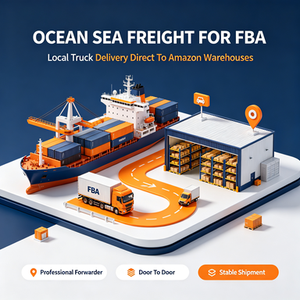
With Vietnam becoming a powerhouse for e-commerce exporters shipping to North America, Europe, and Australia, local consolidation centers in HCMC act as primary aggregation nodes. Goods from regional sub-tier manufacturers are collected, quality-checked, labeled in compliance with Amazon FBA specifications, and consolidated into ocean LCL or direct air freight vectors. Final-mile partners at the destination manage bonded customs clearance and dock delivery without middleman delays.
Southern Vietnam’s agricultural and seafood exports—originating from the fertile Mekong Delta and passing through HCMC logistics nodes—require continuous temperature-controlled cold chains. Last-mile suppliers operating out of HCMC manage refrigerated drayage (reefer containers), pre-cooling validation, phytosanitary inspection filings, and expedited airport transfer to Tân Sơn Nhất International Airport (SGN) to prevent spoilage and guarantee thermal integrity.
The logistics infrastructure in HCMC is undergoing structural modernization driven by government master plans, foreign direct investment (FDI), and stringent international ESG (Environmental, Social, and Governance) expectations. Understanding these macro trends allows global procurement teams to future-proof their supply networks.
To combat urban air pollution and meet corporate zero-emission targets, logistics providers in HCMC are rapidly replacing diesel light trucks with Electric Vehicles (EVs). Municipal incentives for green transport corridors in Thủ Đức City are accelerating EV adoption for final-mile delivery.
The construction of HCMC Ring Road 3 and the mega-infrastructure development of Long Thành International Airport will bypass legacy urban bottlenecks. This shift will drastically reduce transit times between industrial parks in Đồng Nai/Bình Dương and export freight gateways.
The Vietnam General Department of Customs is upgrading its VNACCS/VCIS system to support automated AI-driven risk management. Logistics suppliers that integrate API data exchanges achieve instant customs releases, reducing dwell times at Cát Lái Port by up to 40%.
Practical insights for sourcing, customs management, and final-mile logistics operations in the Ho Chi Minh City market.
Under normal traffic conditions, container drayage from Cát Lái Port to VSIP (Bình Dương) or Amata (Đồng Nai) takes between 2 to 4 hours. However, port quay congestion and peak-hour road bottlenecks can add delays. Experienced suppliers mitigate this by scheduling nocturnal container pulls between 10:00 PM and 5:00 AM when road restrictions are lifted.
HCMC enforces strict municipal curfews banning medium and heavy trucks (payload capacity over 2.5 tons) from inner districts during peak hours (6:00 AM–9:00 AM and 4:00 PM–8:00 PM). To maintain continuous operations, suppliers utilize small-capacity delivery vans under 1.5 tons, which are exempt from these bans, or leverage night-time warehousing staging.
Our DDP solutions calculate all landed cost components prior to cargo dispatch. We manage tariff classifications under the Vietnam Harmonized System (VN HTS), prepare origin documentation (such as Certificate of Origin Form E or Form AK), and process duty payments directly with Vietnam Customs, ensuring seamless door delivery with zero unexpected fees for the consignee.
Yes. We operate combined overland trucking routes (via the Pingxiang/Lạng Sơn border gate) and short-sea shipping routes connecting Guangdong/Shenzhen to HCMC ports. This dual-track approach provides clients with options to balance speed against freight cost depending on inventory urgency.
Exporters must provide a Commercial Invoice, Packing List with accurate carton dimensions and weights, Bill of Lading (BOL), Certificate of Origin (if preferential tariff treatment is requested), and Amazon-compliant carton/pallet labels. Our team provides complete label checking and warehouse prep in HCMC prior to export loading.
We utilize active temperature-monitored reefer trucks equipped with real-time GPS sensors that log temperature data continuously from factory loading to airport cargo terminal handoff. Our expedited airport handling teams ensure rapid transfer into temperature-controlled airport cold storage units prior to flight loading.
Consult with our international logistics specialists to analyze your trade routes, streamline customs compliance, and secure competitive final-mile delivery rates across Southern Vietnam and global destination markets.
