Explore our heavy machinery transport, breakbulk freight forwarding, containerized LCL/FCL, and customs cleared DDP solutions engineered specifically for South African trade corridors.

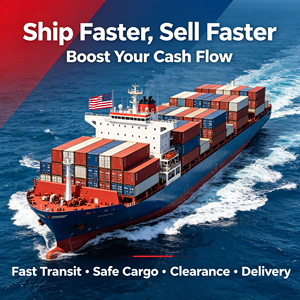
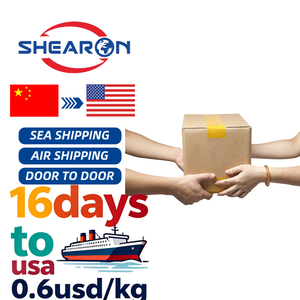
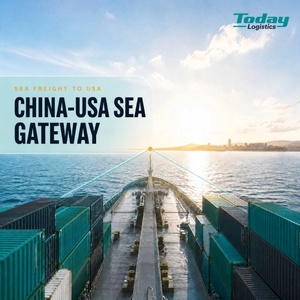
Navigating industrial expansion, mining recapitalisation, and renewable energy infrastructure in the Southern African Development Community (SADC).
South Africa’s industrial landscape is undergoing a profound structural evolution. Driven by national infrastructure initiatives such as the Renewable Energy Independent Power Producer Procurement Programme (REIPPPP), massive recapitalization in the Northern Cape mining belt, and ongoing modernization across Transnet’s port and rail networks, the demand for specialized heavy lift equipment, oversized breakbulk shipping, and turnkey project logistics has reached an unprecedented peak.
Procuring and moving heavy industrial assets—ranging from 400-tonne power transformers and wind turbine nacelles to heavy hydraulic excavators, pressure vessels, and modular processing plants—presents acute technical challenges. Importers and Engineering, Procurement, and Construction (EPC) contractors serving South Africa must contend with strict highway axle-load regulations imposed by the Department of Transport, congested maritime terminals at the Port of Durban, and complex customs documentation enforced by the South African Revenue Service (SARS).
As premier global heavy lift suppliers and international logistics coordinators, our enterprise bridges the operational gap between global manufacturing powerhouses (such as Guangdong, Jiangsu, and Shandong in China) and final job sites across Gauteng, Mpumalanga, Limpopo, and cross-border SADC corridors into Zambia, DRC, and Mozambique.
Heavy lift logistics is not merely about transportation; it is an engineering discipline requiring precise route surveys, hydrostatic load calculations, and specialized lifting gear. Our technical teams deliver comprehensive end-to-end management for Out-of-Gauge (OOG) and Heavy Lift (HL) shipments.
Deployment of multi-axle hydraulic SPMTs capable of distributing ultra-heavy payloads across South African bridges and unpaved mine sites.
Securing specialized marine vessel slots, heavy-lift crane ships, and flat-rack containerization for over-height and over-width industrial equipment.
Direct coordination with SANRAL and provincial road authorities to secure AV (Abnormal Vehicle) permits and police escorts along the N3 and N1 corridors.

Every heavy lift project serving South Africa is assigned a dedicated logistics engineer overseeing factory pickup, marine loading, and final site discharge.
A detailed technical overview mapping industrial commodities to optimal South African port gateways, inland transit modes, and regulatory requirements.
| Industrial Sector | Typical Heavy Machinery Payload | Primary SA Port Gateway | Inland Route Corridor | Special Permit / Regulation |
|---|---|---|---|---|
| Mining & Metallurgy | Ball mills, crushers, hydraulic excavators, flotation cells | Port of Durban / Richards Bay | N3 Highway → Johannesburg / Rustenburg / Northern Cape | TRH11 Abnormal Vehicle Permit, SARS Duty Drawback |
| Renewable Energy | Wind turbine blades, nacelles, 400kV transformers | Port of Ngqura (Coega) / Cape Town | N10 → Northern Cape solar/wind energy zone | SANRAL Bridge Stress Evaluation, ITAC Import Permit |
| Civil Infrastructure | Tunnel boring machines (TBM), bridge girders, mobile cranes | Port of Durban | N3 Corridor → Gauteng Infrastructure Hub | Provincial Superload Permit, Route Survey clearance |
| Oil & Gas / Chemicals | Pressure vessels, heat exchangers, distillation columns | Port of Saldanha / Cape Town | Western Cape Industrial Feeder Routes | SABS Pressure Vessel Certification, Hazardous Escort |
| Agricultural Equipment | Heavy combine harvesters, tractor fleets, processing lines | Port of Durban / Port Elizabeth | N1 Highway → Free State / North West Province | Phytosanitary Clearance, Standard Flat Rack Handling |
Traditional international procurement often forces South African buyers to contract under Free On Board (FOB) terms. Under FOB, the buyer inherits substantial risks once cargo passes the ship's rail at Asian ports—including ocean freight rate volatility, marine insurance claims, port demurrage, and SARS customs friction upon arrival in South Africa.
Our operational model enables South African enterprises to transition to a seamless Delivered Duty Paid (DDP) framework. Under our managed DDP services, our enterprise assumes single-point accountability for:

Our legal and tariff teams navigate South African Revenue Service rulings, ITAC import licenses, and preferential trade agreements with total precision.
From initial engineering survey in China to final offloading at South African site locations.
Detailed inspection of payload dimensions, center of gravity, axle loading requirements, and physical road surveys from port to site.
Local teams in Guangdong, Shanghai, or Ningbo oversee crane lashing, seaworthy packaging, and vessel loading compliance.
Direct vessel routing via specialized breakbulk or container carriers, supported by 24/7 satellite telemetry monitoring.
Advance SARS electronic customs filing, berth reservation, and direct ship-to-trailer heavy crane discharge at Durban/Coega.
Execution of heavy transport using SPMTs and lowbed trailers, fully escorted by traffic management and safety personnel.
On-site hydraulic jacking, skidding, and crane installation onto foundation bolts at the mine, plant, or power station.
Understanding macroeconomic shifts, green hydrogen developments, and SADC cross-border expansion.
Looking toward the next decade, South Africa's demand for heavy lift machinery is set to accelerate across three primary strategic pillars:
Projects in the Boegoebaai Green Hydrogen Special Economic Zone and solar/wind hubs in the Eastern and Northern Cape require thousands of heavy components. Bringing in high-capacity electrolyzers, massive wind turbine components, and substations demands specialized heavy lift logistics partnerships capable of handling multi-year project rollouts.
Transnet’s ongoing structural reforms—including introducing private terminal operators at Durban Pier 2 and Richards Bay—are projected to significantly increase berth productivity, reduce container dwell times, and streamline heavy lift breakbulk handling capabilities.
South Africa serves as the primary gateway for the Sub-Saharan region. Heavy lift suppliers must offer seamless transit shipping through South African ports to landlocked mining hubs in Zambia’s Copperbelt and the Democratic Republic of Congo (DRC) via Beitbridge and Kasumbalesa border posts.
Clear, expert answers to key logistical, customs, and operational questions when importing heavy machinery into South Africa.
Transporting heavy lift cargo that exceeds standard legal dimensions (width > 2.6m, height > 4.3m, overall length > 18.5m, or gross mass > 56,000kg) requires an Abnormal Vehicle (AV) Permit issued under TRH11 guidelines by SANRAL and relevant provincial road authorities. Route surveys, bridge stress evaluations, and official traffic escorts are mandated based on the final axle load configuration.
The Port of Durban is the primary gateway for cargo destined for Gauteng and the central industrial hub due to established rail and highway connectivity (N3). However, for super-heavy payloads or renewable energy projects in the Cape region, the deepwater Port of Ngqura (Coega) and the Port of Richards Bay offer dedicated breakbulk terminals with lower congestion and high-capacity mobile harbor cranes.
Under DDP terms, our freight enterprise handles all SARS entry declarations, HTS code verification, customs duty payments, and VAT deferral mechanisms before cargo arrival. This eliminates unexpected port storage fines, customs holds, or administrative friction for South African buyers, providing a single guaranteed landed price.
Direct ocean freight transit from major Chinese ports (Shanghai, Ningbo, Shenzhen, Guangzhou) to Durban typically ranges between 20 to 28 ocean days depending on carrier service lines. Factoring in origin lashing, SARS pre-clearance, port discharge, and abnormal road transport, total door-to-job-site delivery takes approximately 30 to 40 days.
Yes. Utilizing South Africa’s bonded transit corridors, cargo can enter Durban under custom bond (RIB / RIT documentation) and move overland to Zimbabwe, Zambia, Botswana, and DRC without paying South African customs duties, clearing final customs only upon entry into the destination country.
We provide comprehensive Institute Cargo Clauses (A) All-Risk insurance policies covering loading, ocean transit, discharge, and inland abnormal transport. Pre-shipment surveys conducted by certified marine surveyors establish cargo condition prior to vessel departure, ensuring full risk protection.

Backed by our international office footprint across North America and key Asian sourcing hubs (Guangzhou, Shenzhen, Vietnam, Bangladesh) as well as our global membership in the WCA World network, we offer unmatched project freight stability.
 Member of WCA World—Connecting over 10,000 accredited freight forwarding partners worldwide.
Speak directly with our senior project cargo engineers and South African trade compliance experts. Request custom engineering surveys, landed DDP rate estimations, and comprehensive product catalogs today.
