Factory-direct export support, multimodal heavy-haul forwarding, and fully compliant Middle East door-to-door delivery systems.
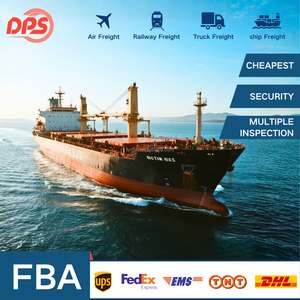
Specialized LCL/FCL consolidation, out-of-gauge (OOG) vessel chartering, and seamless DDP door-to-door transit from South China industrial hubs to Mina Jebel Ali and Khalifa Port.
High-priority charter and scheduled air cargo services connecting major manufacturing centers with Dubai International (DXB) and Al Maktoum International (DWC) for emergency project components.
End-to-end heavy equipment logistics complete with specialized flat-rack containers, open-top vessels, marine cargo insurance, and on-site factory pickup across Asia and North America.
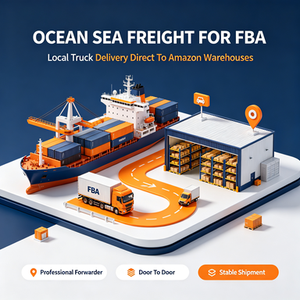
Integrated port drayage, quay-side handling, and heavy-haul truck transportation across all seven Emirates, backed by RTA permits and specialized pilot escort arrangements.
Comprehensive supply chain management for EPC contractors, covering factory packing compliance, customs duty exemption filings under MOIAT, and full job-site offloading.
Precision temperature control, 24/7 telemetry monitoring, and specialized rigging services for industrial process skids, water treatment modules, and green hydrogen components.
Expert quay-to-foundation positioning utilizing Self-Propelled Modular Transporters (SPMT) and heavy-lift mobile cranes for power generation and oilfield infrastructure.
Strategically positioned bonded warehouse storage in JAFZA and KIZAD with onward overland transportation across Saudi Arabia, Oman, and Kuwait via regional heavy haulage networks.
Executing project cargo shipping to the United Arab Emirates (UAE) demands far more than basic freight forwarding. As the UAE advances its ambitious industrial roadmap—anchored by Operation 300bn, massive investments by ADNOC in energy infrastructure, the expansion of the Mohammed bin Rashid Al Maktoum Solar Park, and extensive civil networks like Etihad Rail—the demand for highly technical, ultra-reliable project cargo exporters has reached unprecedented levels.
Project cargo by definition involves non-standard, high-value, heavy-lift, or over-dimensional cargo (ODC) that cannot be transported via conventional containerized methods. Moving massive process columns, industrial turbines, pre-fabricated steel structures, modular chemical skids, and heavy earthmoving machinery into UAE destinations requires meticulous route engineering, early marine chartering, specialized rig-to-hook maneuvers, and deep familiarity with localized Middle Eastern customs protocols.
Prior to vessel discharge at Jebel Ali or Khalifa Port, our engineering teams perform detailed 3D route sweep path analyses, bridge load-bearing verifications, and overhead clearance evaluations across UAE highway networks to eliminate transport bottlenecks.
Navigating the Ministry of Industry and Advanced Technology (MOIAT) industrial duty exemptions, FANR nuclear compliance, and Dubai/Abu Dhabi Customs valuation rules to prevent costly demurrage and detention at port gates.
Deploying specialized gear including tandem crane lifts, hydraulic jacking systems, ballasted barge transport, and multi-axle Self-Propelled Modular Transporters (SPMT) engineered to sub-millimeter positioning tolerances.
Tailored logistics models engineered to meet the unique operational standards of the UAE's primary industrial zones and mega projects.
Exporting massive pressure vessels, heat exchangers, and drilling rig components directly to offshore artificial islands (e.g., Upper Zakum) or onshore fields like Habshan and Ruwais. Freight execution adheres strictly to ADNOC offshore safety specifications, requiring marine barge chartering, heavy-load landing craft transport, and specialized sea-fastening calculations certified by marine warranty surveyors (MWS).
Managing high-volume, synchronized deliveries of utility transformers, inverter stations, and concentrated solar power (CSP) receivers for projects within the Mohammed bin Rashid Al Maktoum Solar Park and Al Dhafra Solar PV plant. Our staging strategy integrates bonded port storage with just-in-time (JIT) site dispatch to minimize congestion at desert installation sites.
Delivering heavy manufacturing equipment, automated assembly lines, and industrial boilers directly into primary economic zones such as Khalifa Industrial Zone Abu Dhabi (KIZAD), Industrial City of Abu Dhabi (ICAD), and Jebel Ali Free Zone (JAFZA). We coordinate seamless duty-suspended transfers under local freezone-to-freezone bonded transit mechanisms.
The UAE project cargo landscape is experiencing rapid evolution, shaped by government localization policies, digital transformations in logistics, and global decarbonization mandates. Project cargo manufacturers and exporters must align with these macro trends to maintain a competitive advantage:
Under Abu Dhabi's and the federal government's National ICV Program, EPC contractors and procurement managers prioritize logistics suppliers that possess strong local asset footprints and high ICV scores. Exporters partnering with established logistics networks that utilize local heavy-haul fleets, local labor, and UAE-based technical services gain a distinct edge during tender evaluations.
In accordance with the UAE’s Net Zero by 2050 strategic initiative, major project owners are actively auditing carbon emissions throughout their capital project supply chains. Exporters that utilize fuel-efficient heavy-lift marine vessels, optimize multi-modal rail connections via Etihad Rail freight terminals, and deploy low-emission port transport machinery are winning long-term project contracts.
Modern project cargo logistics has shifted away from empirical estimation toward precise digital modeling. High-value cargo shipments now utilize 3D spatial scanning, dynamic vessel motion analysis (evaluating pitch, roll, and heave forces during ocean transit), and real-time IoT sensor packages monitoring tilt, humidity, shock, and temperature throughout the sea voyage.
With an established international infrastructure spanning key global manufacturing hubs—including Los Angeles, New York, China, Vietnam, and Bangladesh—alongside accredited WCA World network coverage, our organization bridges the gap between global factory floors and Middle Eastern job sites.
Technical answers to critical questions faced by UAE buyers, procurement officers, and international project exporters.
