Deploying robust multimodal transport solutions, consolidated LCL/FCL ocean freight, high-priority air cargo, and complete door-to-door (DDP) customs-cleared dispatch to Qatar's expanding market hubs.
Consolidated sea freight logistics engineered for small to mid-sized shipments, offering hassle-free customs clearance, tax integration, and final mile trucking.
Get Catalog
Accelerated air transport with direct customs clearance pathways designed for time-sensitive commercial stock, spare parts, and urgent inventory replenishments.
Get Catalog
Comprehensive maritime freight services complete with origin factory pickup, full risk insurance coverage, and scheduled delivery to Qatari commercial zones.
Get Catalog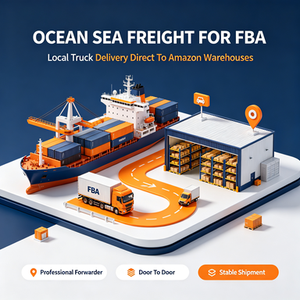
Full Container Load (FCL) shipping solutions backed by dedicated port drayage, inland flatbed transport, and heavy-equipment offloading capabilities.
Get Catalog
Turnkey supply chain execution covering customs duty prepayments, regulatory compliance verification, temporary storage, and localized distributions.
Get Catalog
Optimized multimodal freight combining rapid consolidation in China export hubs with swift clearance and last-mile dispatch to Qatari destinations.
Get Catalog
Cost-effective LCL freight options featuring flexible Incoterms (DDU/DDP), localized cargo tracking, and specialized heavy-haul domestic transport.
Get Catalog
Tailored warehousing logistics including item labeling, palletization, sorting, and seamless inventory transfer to regional distribution networks.
Get CatalogThe State of Qatar has established itself as one of the Middle East’s most dynamic economic engines. Driven by Qatar National Vision 2030, the country is undergoing an unprecedented infrastructural and economic transformation. This rapid expansion demands sophisticated international warehousing fulfillment exporters who possess deep operational knowledge of the Gulf Cooperation Council (GCC) regulatory environment, advanced cold-chain requirements, and seamless customs integration.
Logistics into Doha centers heavily around strategic infrastructure projects, including the state-of-the-art Hamad Port (Umm Al Houl) and Hamad International Airport (DOH). As importers and global brand exporters scale up their trade lanes into Doha, navigating local customs clearance via Qatar’s single-window clearance portal—Al Nadeeb—has become a pivotal factor in avoiding costly port demurrage and inventory bottlenecks.
Exporting to Doha is no longer merely about port-to-port maritime shipping. Modern supply chains demand integration with Qatar's advanced economic nodes, specifically Ras Bufontas Free Zone (adjacent to the airport) and Um Alhoul Free Zone (adjacent to Hamad Port). Utilizing a warehousing fulfillment exporter capable of managing duty-deferred storage within these free zones allows global enterprises to hold inventory locally without triggering immediate import tariffs, drastically improving working capital efficiency.
Furthermore, Qatar's geographic environment presents unique operational challenges. With summer ambient temperatures frequently exceeding 45°C (113°F), maintaining structural integrity and product viability for temperature-sensitive goods—ranging from pharmaceuticals and cosmetics to high-end electronics and perishable consumables—requires an uninterrupted, climate-controlled logistics ecosystem from origin export packaging to destination fulfillment warehouses in Doha.
Examining how tailored warehouse fulfillment and specialized export strategies address the distinct commercial demands of Qatar's key industrial zones.
Global e-commerce brands exporting to Qatari consumers require high-velocity pick-and-pack fulfillment. By utilizing origin consolidation in China/Europe paired with rapid DDP air freight into Doha, products bypass traditional multi-tiered distribution networks. Orders are ingested into localized WMS software, pre-labeled, cleared through Al Nadeeb within hours, and dispatched directly to residential addresses across West Bay, Pearl-Qatar, and Lusail City.
Industrial exporters delivering capital equipment, industrial valves, and construction assemblies to Qatar's energy and infrastructure sectors utilize specialized FCL ocean freight and breakbulk services. Cargo landing at Hamad Port undergoes immediate drayage to bonded staging yards in Um Alhoul, featuring heavy-lift crane offloading, protective anti-corrosion tarping, and scheduled flatbed delivery to construction sites nationwide.
Fast-Moving Consumer Goods (FMCG) require strict temperature compliance throughout transit. Exporters utilize specialized reefer containers (2°C to 8°C or deep-freeze -18°C) equipped with real-time IoT temperature logging. Upon arrival, shipments move directly to climate-controlled logistics facilities in Birkat Al Awamer and Al Wukair for swift cross-docking and distribution to retail chains across Greater Doha.
The Salwa Road commercial sector represents Qatar’s primary automotive spare parts distribution hub. Exporters implement consolidated LCL sea freight solutions paired with localized inventory warehousing. Spare parts are cataloged using SKU-level barcoding, allowing Qatari auto distributors to order micro-batches with guaranteed same-day delivery from centralized storage hubs.
Combining global infrastructure with localized expertise to guarantee transparent, cost-effective, and fully compliant supply chain performance.
We eliminate supply chain opacity by converting complex Free On Board (FOB) origin purchases into fully landed Delivered Duty Paid (DDP) transactions. Importers in Doha receive a single, transparent invoice covering freight, insurance, Qatari customs duties, and local delivery fees.
As a verified partner within the WCA World network, our operational reach extends across major export hubs in China (Guangzhou, Shenzhen, Ningbo, Shanghai), Southeast Asia (Vietnam, Bangladesh), Europe, and the United States, providing direct corridors into the Gulf region.
Navigating Qatari import standards requires precision. Our dedicated compliance managers coordinate directly with Qatari Customs officers, ensuring precise HTS code classification, proper Certificate of Origin (CoO) attestations, and full conformity with Qatar General Organization for Standardization (QS) regulations.
Executing high-efficiency supply chain operations serving the Qatari market demands a granular understanding of multimodal transport mechanics, regulatory clearance protocols, and strategic inventory positioning. For international exporters and Doha-based enterprise buyers, logistics failure is rarely caused by ocean vessel delays alone; it is more frequently triggered by administrative friction at origin export points or customs documentation mismatches upon arrival at Qatari ports of entry.
Importing commercial shipments into Qatar requires complete integration with Al Nadeeb, the State of Qatar’s online customs clearance single-window system. To achieve expedited clearance without physical container holds or penalty levies, exporters must ensure strict adherence to document legalization protocols:
Given the hyper-arid climate of the Qatari peninsula, warehouse fulfillment exporters must implement rigorous thermal management protocols. Modern distribution centers servicing Doha—such as those operating in Birkat Al Awamer, Al Wukair, and the Free Zones—utilize high-density automated storage systems backed by multi-zone climate control.
Our export warehousing operations utilize multi-layered thermal insulation, vacuum-insulated packaging (VIP), and real-time data loggers capable of transmitting temperature, humidity, and shock data throughout the maritime transit across the Indian Ocean and Arabian Gulf. Upon arrival at Hamad Port, pre-booked reefer drayage chassis transfer containers immediately to temperature-regulated dock bays, preventing thermal shock during offloading.
Historically, Middle Eastern importers purchased goods under Free On Board (FOB) terms, placing the operational burden of ocean freight booking, marine cargo insurance, import customs clearance, and local Qatari drayage entirely on the buyer. However, modern corporate procurement strategies in Doha are rapidly shifting toward Delivered Duty Paid (DDP) models.
Under a unified DDP framework managed by a professional exporter, the total cost of ownership (TCO) becomes entirely predictable. Landed cost calculations include factory collection, origin port fees, ocean/air freight tariffs, Qatari customs duties (typically 5% for standard commercial items, higher for specialized goods), legal attestations, bonded warehousing fees, and final-mile transport. This single-source responsibility model mitigates financial volatility caused by fluctuating demurrage charges or unexpected port inspection fees.
Addressing critical operational queries from procurement managers and enterprise importers operating in Qatar.
Direct ocean freight shipments from major Chinese export ports (Guangzhou, Shenzhen, Ningbo, Shanghai) to Hamad Port (QA HMD) typically require between 18 to 25 days in maritime transit, depending on the carrier loop and port calls. Air freight shipments from Guangzhou or Shanghai to Hamad International Airport (DOH) average 2 to 4 days for direct express service, and 5 to 7 days for consolidated air freight including origin staging and customs clearance.
Qatar applies the standardized GCC Common Customs Tariff. Most standard commercial commodities incur a 5% customs duty based on the CIF (Cost, Insurance, and Freight) value of the shipment. Certain items, such as steel or protected local agricultural produce, may attract higher protective tariff rates, while duty-exemptions apply to specific industrial equipment, raw materials imported for local manufacturing, or goods landed directly within the Ras Bufontas and Um Alhoul Free Zones.
Mandatory documentation includes: (1) Original Commercial Invoice attested by the Chamber of Commerce and Qatari Embassy in the exporting country, (2) Original Certificate of Origin (CoO), (3) Detailed Packing List specifying gross/net weight and SKU breakdown, (4) Bill of Lading (Ocean) or Airway Bill (Air), and (5) Certificate of Conformity (CoC) for regulated technical or automotive goods. Our DDP export service manages the procurement, verification, and submission of all required documentation.
Yes. We operate fully air-conditioned and humidity-controlled fulfillment centers strategically located near Doha’s main arterial transportation corridors. Our infrastructure supports continuous temperature monitoring (maintaining ambient temperatures below 22°C year-round or specialized cold storage between 2°C and 8°C), integrated real-time WMS barcode scanning, itemized pick-and-pack services, and automated domestic last-mile dispatch throughout Qatar.
Purchasing under DDP (Delivered Duty Paid) transfers all operational risk, regulatory compliance burdens, freight rate fluctuations, and Qatari customs clearance procedures to the exporter/logistics provider. Importers in Doha avoid dealing with multiple freight vendors, customs brokers, and domestic trucking firms. Instead, they receive a guaranteed, all-inclusive landed cost per unit delivered directly to their warehouse door with zero administrative delay.
Connect with our senior logistics architects to evaluate your freight routes, optimize landed costs, and implement climate-controlled warehouse fulfillment tailored for the Qatari market.
Get Catalog